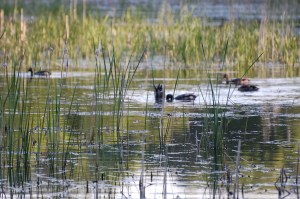
Wetlands, photo courtesy of Ducks Unlimited

Wetlands, photo courtesy of Ducks Unlimited

Recently I’ve begun to use the term “natural infrastructure” (I didn’t coin it) because we’ve had a lot of news about tax dollars being needed to pay for infrastructure. Its seems like an opportune time to get people thinking about the economic and environmental benefits of putting a portion of our infrastructure dollars towards “natural infrastructure” versus “grey infrastructure” which is the traditional engineered concrete and steel approach. So here is why I’m drawing attention to this now.

Over the last couple of months Manitobans have been living with the fear of another flood and all the devastation it brings to those affected- humans, animals and our lakes. The good news is that we have avoided a major flood this year due to the long, cold, dry spring that slowed down the melt. However there have been pockets of flooding that have wreaked devastation in specific locales, like the flash flood in Gilbert Plains that caused the death of 12 farm animals. Apparently the water rose several feet in a matter of 40 minutes and although it moved through very quickly, the ranchers did not have time to rescue all their animals. This particular area has never seen flooding before and the residents attribute it to all the drainage that has occurred upstream of them.

The practice of drainage of our landscapes has been going on for the past century in North America with the result being that we have lost 70 % of our wetlands across the Prairies. Those wetlands provide natural infrastructure functions of holding on to water, slowing it down in heavy rain or flood events and filtering some of the phosphorus and nitrogen that we don’t want getting into our waterways to feed the blue-green algae. So when you consider we’ve lost 70% of those important functions its no surprise that were seeing more incidence of flooding and increasing degradation of lakes with large blue-green algae blooms. Our Lake Winnipeg actually received the designation of Threatened Lake of 2013 because of the growing problem of blue-green algae, some of which is toxic.
Grey infrastructure has helped large communities to avoid flood destruction but it cannot protect the rural landscape, farms and small communities nor can it keep all the excess phosphorus and other pollutants from fouling our lakes. That’s what natural infrastructure, wetlands, can do! So protecting wetlands and reconstructing in targeted areas some of the water-holding capacity that natural infrastructure offers, would be a very smart and efficient use of some of our tax dollars.
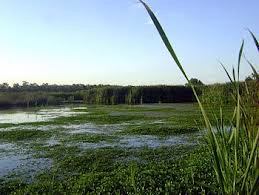
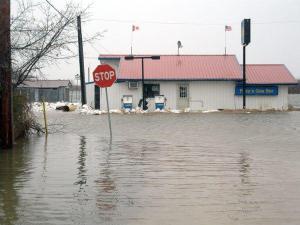
image of green vegetation arund a marshy area

Wetland Holding Water

Recently I was searching the web for any information relating wetlands and drainage to increased flood severity. Its an area of particular interest right now as we await another spring flood in Manitoba. DUC(Manitoba) has done some excellent work on this issue, relating the drainage of almost 70% of our Prairie wetlands over the past century, to increased peak flows during floods and heavy rain events. Its well-recognized now that when the peak flows occur they bring a great deal of the phosphorus off the landscape and deliver it quickly into Lake Winnipeg and other lakes. There it stimulates the growth of blue-green algae that are threatening the health of our lakes.
I was very interested to find this paper “ THE ROLE OF WETLANDS IN PROVIDING FLOOD CONTROL BENEFITS” By Len Cernohous U. S. Fish and Wildlife Service, Bismarck Area Office, North Dakota December 1979. I was struck by the fact that 34 years ago there was recognition of the connection between wetlands and flood control, yet we seemed to have ignored this and now are dealing with the consequences of more frequent and more severe flooding. I certainly don’t want to diminish the contribution of climate change and more extreme weather events to flooding but I do think its time to get serious about taking action on anything we can to decrease the severity of flooding.
The final comments in Cernohous’paper are more apt then ever now.Its time for us to make serious and meaningful investments in wetland protection and restoration. “Whatever the flood reduction potential achieved by wetland protection, 2 percent, 10 percent, or 20 percent, the important point is that it is a percentage that man can control. We have no control over a rapid melt, spring rains or heavy snows, but we can control the impact of drainageand poor land use. By protecting existing wetlands, restoring drained wetlands, and practicing good land use, we can expect to gain a significant measure of flood control and reduce the escalating economic losses.”

Flooding in Manitoba 2010

Flooding in Manitoba 2010

Yet again, we are nervously awaiting another flood in Manitoba. The severity of it will be dependent on the weather over the next month but our provincial flood forecaster has put out a warning now that we will face significant flooding, no matter what. There is growing acceptance that the frequency and severity of flooding has been exacerbated by the amount of drainage we’ve done over the past century and by climate change. Its not just a fluke of weather.
There has been much progress made over the past decade in protecting more people in rural communities, with ring dikes waiting to be closed around vulnerable towns. There are still some major gaps in that protection though and still some people who are dislocated due to the flood from 2 years ago. Even those in rural areas whose homes are protected, face huge stress and disruptions with roads being closed, businesses affected and fields underwater. As well, we still have not paid all the bills from the flood of 2011, now thought to cost 1.2billion dollars. One consequence of flooding that remains very problematic is pollution of our waterways and lakes with excess nutrients being washed off the land. We have to assume that Lake Winnipeg and other Prairie lakes will receive another large pulse of phosphorus and nitrogen as the spring melt rushes water off the land and into our streams, rivers and lakes.
Over the last few months the Lake Winnipeg Foundation along with Ducks Unlimited Canada(Manitoba) and the Manitoba Conservations Districts Association have been making joint presentations to diverse audiences, promoting the idea of Keeping Water on the Land. The multiple benefits of holding some water on the land via wetlands include decreasing the severity of floods by slowing down peak flows, building in resiliency for droughts by holding onto water and improving water quality by decreasing run-off of excess nutrients into the streams and rivers. I am encouraged to see this concept gaining momentum in work by American scientists at Oregon State University who have coined the term “re-naturalizing the hydrology”.
We need to start making significant investments in transforming even a small percentage of our landscapes back to its water-storage capacity of last century. There are so many good reasons, economically, socially and environmentally why not doing so could be disastrous.

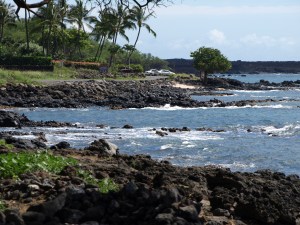
Maui Shoreline

Maui Shoreline

Over the past year I’ve had the good fortune to travel to both Florida and Maui for warm, sunny holidays. Its quite a privilege to be doing that in a year where our Manitoba winter has been very cold and long. However on both trips my vacation was marred by worry about what I was observing in both those locations. It was a reminder that the ecological damage caused by human development is becoming evident in many areas around the world. Improving our sewage treatment systems along with adopting best management practices in agriculture and implementing various ways of holding water on the land, are of utmost importance everywhere if we want to protect our precious lakes, oceans and all the aquatic life they support.
Just weeks ago in Maui, we were disappointed to find far fewer fish on our snorkelling adventures than what we had seen just 4 years ago. When I searched for information about whether it was just one isolated experience I was dismayed to find this report from the Hawaii Division of Aquatic Resources. It documented the decline in coral reef cover at several Maui sites, and stated that:
“Concentrations of nutrients (Nitrogen and Phosphorus) are highly elevated in nearshore areas where algal blooms are found.
Stable isotope ratios (ä15N ‰) in algal tissue are indicative of animal waste (presumably sewage) being their primary source.”
At the same time I received a copy of an article about the death of 174 manatee in southwest Florida as a result of a red tide bloom that has stayed for much longer than usual. A few months ago, I found information about the incidence of red tide increasing dramatically since the 1990s. Red tides are fed by increased nutrients of phosphorus and nitrogen, similar to blue-green algae blooms in freshwater lakes. Although both red tides and blue-green algae have occurred historically, the frequency and size of the blooms is growing related to the increased nutrients running into our waterways from human sewage, animal waste, fertilizers and natural run-off.
We do know now some of the ways that we can decrease the excess nutrients getting into our water. What we seem to be lacking is the will to get started on processes that will cost us more $$ but will protect our precious waters and all the fish, birds and animals that they support.

One of the most important actions needed to help Lake Winnipeg is the city of Winnipeg upgrading two of their wastewater treatment plants. The effluent coming from Winnipeg’s wastewater treatment plants is the single largest point source of phosphorus in the entire watershed. Although it is only between 5 -7 % of the phosphorus load to the lake, there is no other single point source of that magnitude. As well, 2011 emissions data from the National Pollutant Release Inventory (NP~I) show that the Winnipeg plant remained the fourth-largest phosphorus polluter of any industrial facility in Canada, behind sewage-treatment plants in Vancouver and Montreal.  There is definitely a connection between Manitoba having a lake which is considered to be the Threatened Lake of 2013 worldwide and the closest large city, Winnipeg, having the distinction of being the fourth-largest phosphorus polluter in Canada.

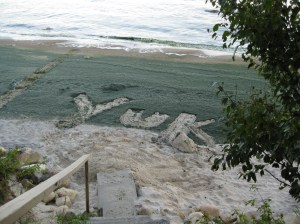
Algae on beach at Lake Winnipeg

Algae on beach at Lake Winnipeg

This inaction from our city may be an influence on what others in our watershed are willing to do. Recently I came across this news from the city of Moorhead in Minnesota which is a few hundred kilometres from Winnipeg. Minnesota Pollution Control Agency is requesting that Moorhead upgrade their wastewater treatment plant to decrease phosphorus emissions but the city is objecting due to the additional cost. Can you blame them when Winnipeg has put off beginning the upgrades to our plants for several years?
The solutions to Lake Winnipeg’s increasing blue-green algae blooms lie in every point source and non-point source of the phosphorus ( meaning every city, town, farm, industry, etc.) assuming responsibility for decreasing their part of the problem. Pointing fingers  won’t fix this problem unless we start by pointing the finger back at ourselves and start doing things right in our own homes and communities. I really hope we can persuade Winnipeg’s city council to hurry up and get going to do the right thing!

The announcement that Global Nature Fund has selected Lake Winnipeg as the Threatened Lake of the Year worldwide has garnered much attention from Manitoba media as well as across the country. It’s not the kind of announcement that anyone is proud of but it is definitely providing an opportunity to raise awareness about the increasing threat of blue-green algae blooms that in some years have covered up to 15,000 sq.km. of the lake’s surface.

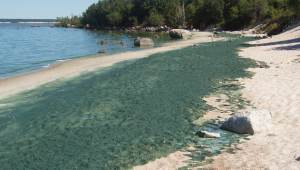
Blue-green algae dried up on beach on Lake Winnipeg

Blue-green algae dried up on beach on Lake Winnipeg

The media attention to this announcement has allowed us to talk about some of the solutions to the lake’s problems and in particular, to emphasize the idea that everyone can be involved in helping to clean up the lake. Starting with simple things like making sure our cleaning products are Lake Friendly, by checking for the EcoLogo Certification, to designing a “green” garden that doesn’t need cosmetic fertilizers, there are many ways we can start to help the lake right in our own homes. Check out the Lake Friendly website for tips on products and practices that “lake friendly”.

Beyond that there are more substantial changes we need to make such as stopping the draining of wetlands and upgrading our sewage treatment systems in Winnipeg and in many rural lagoons. These measures will require government regulation and financial support. For these things to happen we need many more citizens to lend their support so our elected officials will know it matters to us.

Lake Winnipeg’s plight has drawn the attention of diverse groups including the organizers of the Thinkers Conference in Winnipeg Feb.21-23. It has become one of the featured themes of this year’s conference and we’re looking forward to hearing about some of the progressive solutions being presented there by IISD, DUC and the Lake Winnipeg Foundation.

So to sum up, all of us who are working to save our precious Lake Winnipeg are galvanized by the attention and commitment that this Threatened Lake designation has brought to our cause. We are more determined than ever to turn this situation into a good news story.

Posted by: Vicki Burns | January 14, 2013

Lake Winnipeg Nominated as Threatened Lake of the Year Worldwide

The news that Lake Winnipeg has been nominated as “Threatened Lake of the Year, 2013” by the Living Lakes Canada is a clear indication the world is watching and is clearly worried about Lake Winnipeg. This is one distinction that the Lake Winnipeg Foundation does not want to see coming to our province.

I think this should be a wake-up call for all of us Manitobans. When our lake is being talked about in similar terms as some of the world’s foremost environmental lake disasters, we need to pay attention. But it’s not the world that will bring it back to health. It’s up to all of us in Manitoba to make sure that we are taking the most important steps.

The challenges around Lake Winnipeg have been well-documented. Urban waste water, agricultural run-off, an exacerbated loss of wetlands and giant flooding events have all contributed greatly to the critical decline of the world’s tenth largest lake.

Sometimes the vastness of the Lake Winnipeg watershed is used as an excuse as to why we can’t make progress. This is unacceptable. Despite the serious threat and dubious distinction, the Lake Winnipeg Foundation staunchly believes that Lake Winnipeg can be turned around and moved toward a cure.

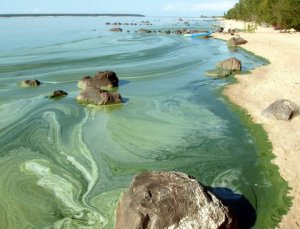
Blue-green Algae Fouls beach on Lake Winnipeg

Blue-green Algae Fouls beach on Lake Winnipeg

The diagnosis is clear. Our lake is seriously threatened. The good news is that our scientists and committed groups like Ducks Unlimited, Manitoba Conservation Districts Association, Lake Friendly, MEIA and IISD are all willing and ready to get going on solutions to help the lake. The Lake Winnipeg Foundation is working to build the collaboration, coordination and action that must begin immediately to stop the deterioration of our great lake. Its time to stop passing the buck and pointing fingers. When Manitobans step up and demonstrate real leadership on our lake, our voice will become much stronger in other jurisdictions. So let’s get going!

Posted by: Vicki Burns | December 17, 2012

Bi-National Efforts Pursued to Save Lake Winnipeg

I was heartened to read this news item detailing a forum that was held at the University of Minnesota on Dec.13. Shared Waters, Shared Responsibilities offered Manitoba a chance to plead our case to Minnesotans about the dire straits that our Lake Winnipeg is in right now. Our Premier, Greg Selinger, proposed the idea that Manitoba develop an accord with Minnesota, North Dakota, South Dakota and the Canadian provinces, Ontario, Saskatchewan and Alberta that all contribute water (containing the problem phosphorus) to Lake Winnipeg.

Lake Winnipeg Watershed map

Lake Winnipeg Watershed map

The greatest majority of phosphorus that is feeding the blue-green algae blooms in Lake Winnipeg flows down the Red River so in order to restore the health of the lake it is going to be imperative to have the cooperation of our southern neighbours. However, I and many others, believe that the first step in this important process is for the city of Winnipeg and the province of Manitoba to demonstrate real leadership in decreasing our contribution to the excess phosphorus and nitrogen that are polluting our lake. We have to show that we are willing to spend the money to improve our city’s wastewater treatment to decrease the phosphorus load from the largest city close to the lake.

Beyond that there are several ways in which we can decrease the nutrient run-off from the landscape by keeping water on the land. Earlier this week I participated in a presentation entitled Keeping Water on the Land in which the Lake Winnipeg Foundation, Ducks Unlimited Canada and the Manitoba Conservation Districts Association presented our ideas to the provincial government caucus, the first step in our collaborative efforts to get action on these ideas. I’ll share more about Keeping Water on the Land in a future blog.

Another year has passed and once again we hear that the city of Winnipeg is delaying beginning the upgrades to the sewage treatment plant. According to statistics from the National Pollutant Release Inventory, Winnipeg is the 4th largest polluter of phosphorus in Canada. This distinction goes along with being the closest large city to Lake Winnipeg which is being considered one of the most threatened lakes in the world, due to growing blue-green algae blooms.

The city of Winnipeg is the single largest contributor of phosphorus to Lake Winnipeg even though it is only 5% of the total phosphorus load to the lake. There is no other single source of phosphorus that can be decreased in this way. For many of us who are working on various issues related to saving Lake Winnipeg, it is very discouraging to see this abdication of leadership from our city. Every time we travel outside the perimeter highway to speak with groups in rural Manitoba about their impact on our largest lake, we are reminded that we cannot even motivate our own city to take action. Saving Lake Winnipeg and several other freshwater lakes in Manitoba is going to take some effort and some investment from every Manitoban. We all benefit in a myriad of ways from having safe, swimmable, fishable lakes and we are all going to have to pay to protect these precious water bodies.

Magnificent Lake Winnipeg

The cost of the upgrades to our sewage treatment system are only going to keep rising. The longer we delay, the costlier it will become and those costs may include financial impacts of the degradation of our lakes – decreased property values, lost tourism, decreased fisheries, to name a few.

The city of Winnipeg has been gradually increasing the water and sewer rates for many years with the justification that the money is needed for improvements to the systems. I’m just now finding out that some of those increased $$ have gone into the general coffers rather than what we were told. So instead of bragging that we’ve had no property tax increases for over a decade, we are now facing very significant costs to do what should have been done many years ago. It’s time for common sense to prevail.  Let’s get on with what needs to be done without further delay. Lake Winnipeg can be saved but we need to take action now. Our own city needs to step up and demonstrate the leadership to do the right thing!

Posted by: Vicki Burns | November 22, 2012

Volume of Water Flowing down Red River Doubles in Last 15 Years

I recently became aware of a very significant trend in water movement on the Red River. Research Scientist, Dr. Greg McCullough, of the Centre of Earth Observation Science at the University of Manitoba, published a study recently that documented the average flows on the Red River during the 1970s and 80s. He then computed the average flows from 1996 to 2005.
According to Dr. McCullough, “Although there were very dry years and very wet years in the 1970s and 1980s, over the long haul, the average flow was about the same—180 cu m/s.  Since 1996, there have been a few dry years as well, but the average flow over the decade from 1996 to 2005 was 2 times the average flow in the 1970s and 1980s. And there was a little more phosphorus in the river, on average.  So that when we multiply the flow X the concentration, we find that the average annual amount of phosphorus carried by the river has increased even more than the flow.”
Dr. McCullough went on to explain, “the amount of phosphorus delivered by the Red River to Lake Winnipeg increased partly because there were more cubic metres of water, on average, each year, and partly because there was more phosphorus in each cubic metre of that water.
There was more phosphorus per cubic metre in the recent decade, partly because we put more on the land than we used to, and partly because floodwaters carry it off the land very efficiently—but that’s another part of the story.”

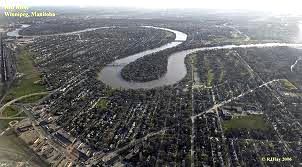
aerial image of Red River flowing through city of Winnipeg

Red River flowing through Winnipeg, photo credit Ron Hay

The timing of this average increase in water flows from the Red River coincides quite consistently with the noticeable increase in blue-green algae blooms on Lake Winnipeg as it was in the late 1990s that the problem started to generate much public attention.
Last week I received information about blue-green algae being seen on the banks of the Red River, from the LWRC blog, early in November. I was surprised because I’d never heard of this before. As well I heard a report of blue-green algae on the rocks around Victoria Beach, another odd occurrence at this time of year. In all, it leaves me with a sense of urgency that we need to build momentum at a much faster rate to decrease the flow of phosphorus into our lake.

« Newer Posts - Older Posts »

Categories