This week I received a copy of the latest edition of Canadian Geographic magazine which includes a poster map that forecasts risks related to changing climate patterns in all the regions of Canada. The poster map shows in “easy to understand” language the kind of changes we can expect to see over the next hundred years. It is a joint effort put together by the Royal Canadian Geographic Society and the National Round Table on the Environment and the Economy.I strongly recommend you getting a copy of the magazine or accessing this report on the web if you’re interested in what is being predicted in your region of Canada.

image of the cover of Canadian Geographic Oct. 2010 edition

Canadian Geographic Oct. 2010

 Where I live on the Prairies, they are predicting increased water scarcity, drought , wildfire and severe floods. We’ve already seen the severe floods this year and in Winnipeg, one of the consequences is that our pretty river walk is underwater again – very odd for this time of year. On the positive side, the golfing is still terrific with our unseasonably warm weather.
Not all of the predictions are negative but I think this type of information emphasizes the need for us to think in much longer terms, to include these predictions in planning for any development both urban and industrial. Most importantly, I hope that we can encourage ourselves to make the small changes in our own lifestyles that will amount to big changes cumulatively.


Posted by: Vicki Burns | October 5, 2010

Lake Winnipeg Needs Our Help, One Action at a Time

I was pleased to see this blog  from Richard Baschak pop up this morning giving a message that is central to what I’ve been spouting on behalf of Community Foundations of Canada for the past couple of years. That message is this – we can all help Lake Winnipeg and other lakes in our country, by learning about how our consumption patterns are part of the problem. After learning more about the ingredients in many of the products we’re using, we can choose to use different products that are EcoLogo Certified and hence, Lake Friendly.The EcoLogo Certified products are Lake Friendly because they do not contain phosphorus and other chemicals that runoff and get into our rivers and lakes,causing toxic algae blooms. 

image of EcoLogo

EcoLogo Certification


So take a moment to look at Richard’s blog and complete their very short survey. Then pass it on to others in your network. Its an easy way to spread the word and get people involved in securing fresh, clean water now and for future generations. 

image of colourful drawing with water, fish, bird and sun rising

Lake Friendly logo

Posted by: Vicki Burns | October 3, 2010

Lake Winnipeg Needs Bold and Gutsy Action

Last Wednesday I attended a meeting of the Lake Winnipeg Foundation at which Dr. Hank Venema, from IISD, was the guest speaker. Hank is the director of the IISD’s newly created Water Innovation Centre. I was impressed with one of the themes of his talk which was that we now have to demonstrate the same “bold and gutsy” actions that some of our forefathers did in the last century related to water. 

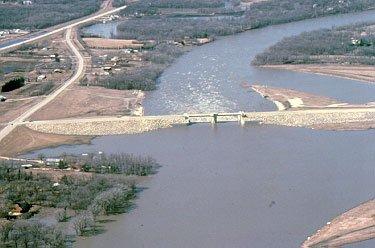
Hank cited 2 examples in Manitoba, the creation of Duff’s ditch (formally known as the Red River Floodway around Winnipeg) and the building of the Shoal Lake aqueduct to bring drinking water to the city of Winnipeg. Both of these projects were completed amidst significant criticism and great expense. However decades later we’re very grateful for the wisdom of those who pursued their construction. 

aerial image of Red River floodway

Aerial view of the Red River Floodway


Hank was promoting the idea that we have to think outside the box to turn the significant problems of blue-green algae in Lake Winnipeg and many other lakes across the country, into opportunities to develop  economic growth through new technologies to remove the excess phosphorus. The phosphorus that is running off our landscape and remaining in our wastewater is a precious resource that we need to make every effort to save. Why – because there is not an unlimited supply in the world and we need it to grow food. 

One big difference between what we need now and what occurred in the last century is that huge infrastructure is likely not the answer. Now we are going to have to re-think many of our agricultural and urban practices to include recognition of the power of natural processes. I’m guessing that we’ll be using concepts of Biomimicry much more in the next 50 years.
In any case, I’m sure that many of us who are concerned about working to ensure clean, fresh water now and into the future, agree that there is not a moment to waste before engaging in bold and gutsy action.

I just received the 2009 Annual Report of  WATER MATTERS, a non-profit Alberta organization that is championing better watershed protection. It is an impressive report with a powerful message on why we need to pay closer attention to protecting our precious water.
I particularly like this quote from chair, Jason Unger “There is a lot of rhetoric about the need to balance our social, economic, and environmental values in Alberta, but the current balancing is a fraud. “Balance” implies equal weight, but the reality is we are off balance, and we are putting too much pressure on our water resources.” 

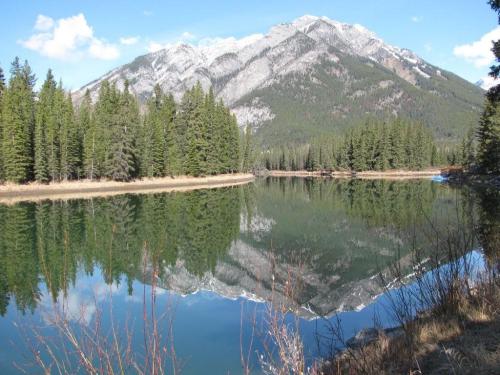
image of peaceful river with mountain in the background

The Bow River in Banff, Alberta


I suspect that claim could be made in almost any jurisdiction in Canada. Even Rob Renner, the Alberta Minister of Environment, is quoted as saying “The water scarcity challenges we face today were not around 100 years ago. We must prepare and adapt.” 

WATER MATTERS is doing an excellent job of advocating for Alberta’s watersheds. I think we need that kind of organization in every province in Canada. What do you think?

Throughout the centuries, humans have used technical advances as a way to capture, control and distribute water, much to the benefit of our cities and growing populations. In Canada, the success in this approach is obvious as we experience population growth, agricultural surplus, and few outbreaks of water born disease.
As we enter into the 21st Century the reliance on technical infrastructure is beginning to fail. Our cities are crumbling and the water infrastructure debt is skyrocketing. Our local environments are being lost and degraded and are no longer able to provide ecosystem services important in protecting our communities from a changing climate. New and long-term pressures threaten our water resources but our current policy and management approaches are woefully outdated. 

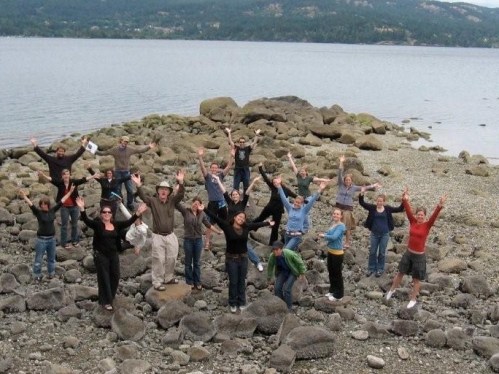
image of a group of people standing with arms extended on a rocky shore

Waterlution participants 2008


Our water challenges are a social dilemma that requires we examine our water resources through a lens of integrated water management and decision-making. We need to rethink how our governments, business, and communities make decisions. It requires new ways of doing business, communicating, and interacting. We need to build up our social infrastructure to provide us with the tools we need to safely and sustainably manage our water.
Canadian Water Innovation Lab (CWIL) is one giant step in the right direction. CWIL is an exciting event creating the space to tackle our water issues — spanning generations, sectors, and cultures — it is a space in which solutions can be developed collaboratively. CWIL is an un-conference for un-common young leaders. It is designed to give 200 of Canada’s most water-passionate and proactive 18- to 30-year-olds the skills, insights, and connections to champion water management issues. Ultimately, CWIL’s mission is to develop leadership capacity, spur community water-related projects, and place water resource management issues prominently on the public agenda. We are building our social infrastructure to address the new and emerging challenges our towns, cities, provinces, territories, and country are facing.
CWIL 2010 takes place October 21 to 24 at Camp Hector near Calgary, Alberta. For more information check out Waterlution’s Canadian Water Innovation Lab.
By Elizabeth Hendriks, Water Governance and Policy Coordinator, POLIS Project on Ecological Governance and CWIL Facilitator

The province of Manitoba and the federal government made it official 2 days ago – they are going to partner in working on a clean-up plan for Lake Winnipeg. The memorandum of understanding that they signed will lead to the creation of a new authority that will help to coordinate research and water quality management throughout the Lake Winnipeg Basin. 

image of blue- green algae on beach

Blue-green algae fouls beach on Lake Winnipeg

I met with Christine Melnick , the Minister of Water Stewardship, yesterday so was able to ask her directly what this agreement really meant. She indicated that it would mean a coordinated approach between the different levels of government regarding research and program priorities for improving the health of Lake Winnipeg. I am assuming that some of those activities will benefit other lakes that are suffering from too much blue green algae as well, because the practices required to decrease excess nutrients getting into the lakes should occur across the landscape.
At the same time as the agreement was signed, the federal government announced funding for 20 projects under their Lake Winnipeg Basin Stewardship Fund. The money provided to that fund ( $3.7 million) was announced back in 2008 and will be completely allocated sometime in 2011. Projects receiving funding are to directly decrease the amount of excess nutrients getting into our water.
I’m encouraged that our governments are formalizing the way they will work together on this problem. But that does not diminish the need for all of us to get involved in protecting our precious water. This is one problem that cannot be fixed by government alone.

The report released yesterday by Stats Canada flies in the face of what most Canadians believe – that we have more than enough freshwater. The annual decrease in freshwater supply  – about 1.4 million Olympic size pools – is especially concerning across the Prairies. It may be hard for people to believe this year, considering the excessive rainfall we’ve experienced in many areas of Alberta, Saskatchewan and Manitoba. However, with the 70% loss of wetlands across the Prairies, much of that rainfall has moved so fast  in creeks, rivers and streams,  over the landscape that our aquifers are not able to recharge as they once did. 

image of lake with rocky island

Canadian lake scene


Last week the Manitoba government and Manitoba Hydro announced a new initiative, offering PowerSmart Water  and Energy Saver kits to Manitobans. The Stats Can report certainly makes this offer look very appealing and well timed.
I hope we can encourage more Canadians to stop wasting water, the sooner the better.

Over the last couple of years as I’ve been involved in work around the Lake Winnipeg Watershed, I’ve come to understand that the toxic algae blooms that are plaguing our great lake are becoming rampant across North America. In the past week I’ve been contacted by a staff from the California Dept. of Public Health requesting permission to use a photo of blue-green algae from Lake Winnipeg, in their pamphlet warning the public about the dangers of this algae.  When I responded to his enquiry and asked where it was occurring in California he listed a number of lakes.Just today I noticed this warning about algae in Lake Ainslie on Cape Breton in Nova Scotia. Coincidentally, I just returned from a vacation in Cape Breton and was struck by the incredible natural beauty of that part of Canada. 

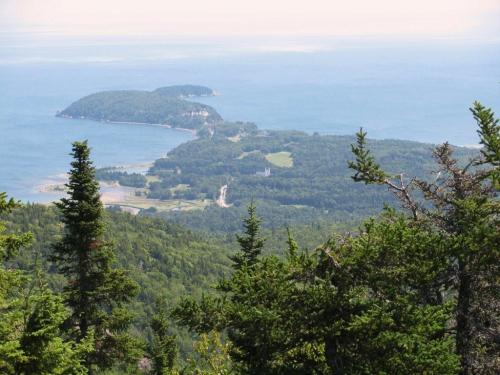
image of water in the distance and peninsula in Cape Breton

View from hill top in Cape Breton


The bottom line is that there are ways we can stop the proliferation of these toxic algae blooms but it seems like its taking us too long to really get serious about making the necessary changes. I’d love to hear from anyone who has any information about significant initiatives to stop this growth in algae blooms in their area.
Surely with this being such a widespread problem, we can get together and use the synergy of our efforts to make real progress towards protecting our freshwater now and in the future.

As the problem of blue-green algae blooms continues to grow on Lake Winnipeg ( and around the world), there are some types of development that are still being allowed that are part of the problem (eg. Beaconia beach). It is likely that many people don’t understand the function of the marshes and wetlands that border some of the water’s edge. In the last few days, I had a chance to speak with several scientists who have focussed much of their study on the role and function of wetlands. There are several developments being started around the edges of Lake Winnipeg that are raising concerns.

image of marsh at lake's edge

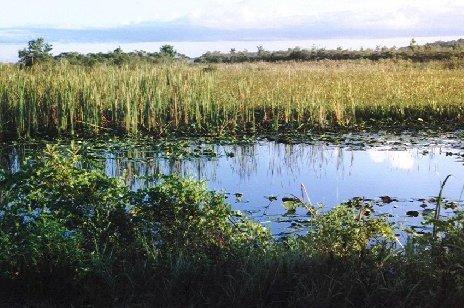
Marsh – last line of defence before the lake

As Dr. Gordon Goldsborough, University of Manitoba, put it to me “ this virgin shore land is the last line of defence before all the chemicals and runoff” hits the water. The marshes at the water’s edge act as a buffer zone, binding some of the unwanted chemicals and excess nutrients,that we don’t want getting into the water. When those natural shorelines are disturbed that buffer zone can no longer do its job.
Dr. Dale Wrubleski of Ducks Unlimited pointed out the importance of those coastal wetlands in providing spawning areas for fish and important habitat for other wildlife. He referenced a report from several years ago “The Netley/Libau Marsh Fish Resource” by R.A. Janusz and J.O’Connor  that spelled out clearly the value of these marsh areas.
Even though some of these developments may seem very small in comparison to the overall size of the lake, their impact is cumulative.
So, how can we satisfy the growth and development needs of these rural municipalities without damaging Lake Winnipeg?

Here is a terrific article by Tom Axworthy, the CEO of the Walter and Duncan Gordon Foundation, that appeared in Regina’s Leader Post today. The answer to the riddle I presented in the title, is in this article and it is Water or lack of it that is the common theme.

Tom’s recent experience on Lake Winnipeg was marred by the presence of a large blue-green algae bloom at Victoria Beach. This is a visible symptom of the deteriorating water quality in this and many other lakes in our great country. The common thread here is too much phosphorus and nitrogen getting into our waterways from our human and animal waste. The only good news is that we can change that but it will take some effort from all of us.

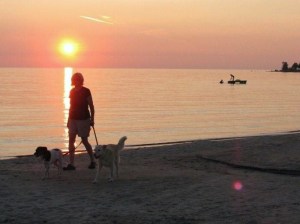
image of woman walking with 2 dogs on leashes along the beach at sunset

Beach at sunset -photo credit John Gosselin

The Ottawa River and the B.C. forest fires are both suffering from too little water so getting everyone to stop wasting water is of prime importance in those areas.

The main message I took from Tom’s article is that we need significant action across the country on both water quality and water quantity issues and our senior governments should be making this a real priority. We all need to work to ensure we have safe, clean water now and for future generations.

« Newer Posts - Older Posts »

Categories