Posted by: Vicki Burns | December 18, 2013

Blue-Green Algae – Becoming a Drinking Water Threat?

Although the main focus of my work is Lake Winnipeg and other Manitoba lakes, I keep my eyes open for news about blue-green algae in other jurisdictions. It seems logical to me that repercussions of blue-green algae blooms in other areas may also occur in Manitoba, if not now at some future point. This news item today caught my attention because if we lose access to our safe drinking water supplies, that becomes a monumental problem.
The city of Toledo and other communities around parts of Lake Erie are concerned that increasing toxicity in the blue-green algae blooms may become serious threats to their drinking water. According to Kelly Frey, the Ottawa County sanitary engineer ““No one has expertise on treating this stuff,” Frey said. “This whole experience is something new. It puts us on edge every day.”

Drinking Water

Drinking Water

Lake Erie is often referred to in discussions about Lake Winnipeg because 35 years ago it was in very unhealthy state due to huge algae blooms. At that point communities around the lake invested significantly in cleaning up point sources of the problem phosphorus (primarily sewage treatment) and the lake rebounded to a much healthier state. However the algae blooms have now appeared again, threatening tourism, fishing, and even drinking water supplies. The attention now is on the non-point sources of phosphorus, primarily agriculture, because they have already minimized the contributions from sewage.
We are still lagging behind in Manitoba, both on the point sources of phosphorus and the non-point sources. I hope that this news from Lake Erie helps to light a fire under us here in Manitoba. There is so much more we could be doing to decrease the threats of blue-green algae in our lakes but it will require significant investments. The costs of not acting now will be so much greater in future decades. Let’s be wise with our actions and our money.

A couple of weeks ago I attended a workshop on Stormwater Management Solutions put on by the Water Caucus of the Manitoba Eco-Network. There were several very interesting speakers including the first, Heather Mack, who was representing the Insurance Bureau of Canada and who made the point that insurance claims related to water damage from the intense storms we’re getting, are rising dramatically. The insurance industry is trying to get municipal officials across the country to pay more serious attention to where the areas of highest risk are. The recent unprecedented flooding in and around Calgary and the flash flood in Toronto this summer, are examples of what we are likely to see more of in the future.

For those of us working on freshwater lake issues, the most dominant one now, being the proliferation of blue-green algae blooms, every extreme storm adds to the possibility of greater algal blooms because of the phosphorus being run off the land in the heavy rain. So anything we can do to slow the run-off and help some of that stormwater to penetrate into the soil, is good news for our lakes. Sharyn Inward, Program Manager for RAIN of Green Communities Canada presented some very practical advice for how to do that in our urban centres. From proper rain barrel management (empty them after big storms in order to get ready for the next one) to creating rain gardens, having permeable parking surfaces, and dog waste composters, these are all ideas that homeowners can implement.

Rain Garden Example - photo from Cuyahoga Soil and Water Conservation District

Rain Garden Example – photo from Cuyahoga Soil and Water Conservation District

Beyond that our municipal governments can adopt policies and practices that shift from stormwater to rainwater management. Laura Brandes of the Polis Project has written a great commentary on the steps the city of Victoria is taking in this direction.  She says there are 3 principles that need to be adopted: 1. Reducing the amount of impermeable surfaces by changing the way we build and retrofit our communities. 2. Using rain as a resource and as a viable decentralized source of water for non-potable needs. 3. Integrating decision-making across and within jurisdictions on a watershed scale.

A few years ago when I was working at the Winnipeg Humane Society and helping to design the new shelter, we decided to work on getting LEED certification for the building. We incorporated 2 features that many people didn’t understand. The first was to have a gravel parking lot so that it was permeable and the second was to collect rainwater to be used for flushing the toilets. I’m glad to see that these ideas, aimed at re-thinking our approach to stormwater, are gaining more attention. There are so many good reasons to do so, not the least of which is the health of our Prairie lakes.

Posted by: Vicki Burns | November 1, 2013

Stakes Are Rising in Blue-Green Algae Threats

In the past week there have been two news items about research related to toxins in some blue-green algae blooms. Both items seemed to raise the stakes on the potential threats associated with growing algal blooms in Manitoba and around the world.
The first news item came from researchers at Oregon State University and the University of North Carolina. Essentially they were describing the increasing toxicity of some algal blooms and they predicted that the strains of blue-green algae(cyanobacteria) that contain toxins will become more prevalent in comparison to the strains that do not contain toxins. Given that these toxins can have serious negative impacts on liver function and are now associated with motor neuron disease, like ALS, Parkinson’s and Alzheimer’s, this is very important and alarming news.
The second news item that caught my attention came from researcher, Dr. Sally Everson, from Tweed Shire Council in Australia. Her research has shown that the toxins from some algal blooms can stay in the water long after the visible signs of blue-green algae have disappeared. Apparently the toxins can actually drop out of the bloom and linger in the cleaner water that is lower in the water column. This has significant ramifications for communities that draw their drinking water from lakes that experience blue-green algae blooms.

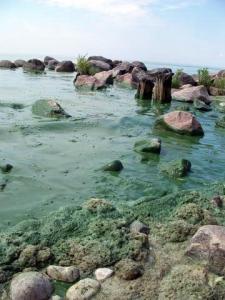
blue-green algae at Minaki, Ontario 2011 - courtesy of Todd Sellers

blue-green algae at Minaki, Ontario 2011 – courtesy of Todd Sellers

So in my estimation, the risks associated with not taking bold and decisive action now to curb the growth of blue-green algae, are increasing. We need to create a much stronger swell of support for the investments required to reducing our exposure to these threats. With each day that passes our potential costs are growing.

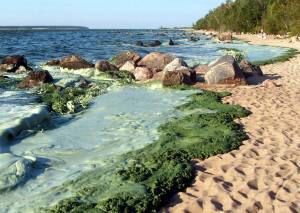
Blue-green algae on the shoresof Lake Winnipeg

Blue-green algae on the shoresof Lake Winnipeg

In the last few days I have seen news of a major scientific discovery in Australia which explains how exposure to blue-green algae can result in motor neuron disease, like ALS. It is important to note that likely only a small percentage of people who are exposed to the particular toxin, BMAA, in some blue-green algae will actually become ill with the disease. But it certainly caused me to pay attention and wonder if the blue-green algae in various lakes in Manitoba are being tested for the presence of BMAA.I have asked our provincial Water Stewardship Dept. and will report the response when I hear it.
The threat of blue-green algae in Manitoba lakes and right across North America is growing as evidenced by the number of alerts issued in at least 21 American States and all 10 Canadian provinces this past summer of 2013. The consequence of these alerts could be assumed to be mainly a disruption in recreational use of our freshwater lakes but it goes much deeper. There are potential issues with human and animal health; aquatic eco-system well-being; fishing industries and property values.
There seems to be a lack of urgency in implementing the measures needed to decrease the amount of phosphorus which is making its way into our streams, rivers and lakes, and ultimately fuelling the increased growth of blue-green algae. It’s frustrating to know that we do have the technologies to intercept, recover and recycle the phosphorus from one of the main point sources, human sewage. But the political will is not there yet to make the investments required. Maybe recognition of serious human health threats will spur faster action. I hope so!

Posted by: Vicki Burns | September 24, 2013

Blue-Green Algae Threats Grow Across North America in 2013

Blue-green algae Lake Winnipeg

Blue-green algae Lake Winnipeg

I routinely try to follow reports of blue-green algae blooms around North America and this year, 2013, there have been blue-green algae reports in at least 21 American states and all 10 Canadian provinces. It seems that this is a growing problem, not just for Lake Winnipeg which is the focus of my work, but for many freshwater lakes across the continent.
The problem of blue-green algae in Lake Winnipeg only becomes apparent to many of us Manitobans, when it shows up in the south basin of our lake. The hugest blooms always appear in the north basin of the lake which is much more sparsely populated although there are several First Nations communities situated right on the shores of the north basin. We don’t have a good system of recording the frequency, size or toxicity of blooms, at least not one that is available to the public. The province of Manitoba, Water Stewardship Dept., do take water samples to determine the amount of phosphorus and nitrogen which is entering Lake Winnipeg each year from the rivers that feed the lake. However we have not seen annual data since 2007 so we don’t know whether those amounts are increasing or decreasing. They do sampling at some Manitoba beaches for the presence of blue-green algae and whether there are any toxins present but this doesn’t give an overall picture of the extent of the blooms throughout the lake. If we are serious about decreasing blue-green algae threats, I think we need to get serious about measuring the size of the problem so we can measure whether we are making progress in fixing it.
In the U.S.A., two environmental groups, Resource Media and the National Wildlife Federation, have issued a report highlighting a list of 147 instances this summer in which state or federal officials posted algae warnings. They have stated that there are many inconsistencies in tracking and reporting algae blooms. The same situation exists here in Canada in that we do not have any consistent tracking and reporting of blooms. I have followed warnings of blue-green algae blooms in all 10 provinces in Canada this year. It would be helpful to create a system for tracking in each country and then across the continent. The solutions to decreasing this threat involve decreasing the phosphorus and nitrogen that are feeding the blooms. Surely we can create synergies in solving this problem by sharing information.

Posted by: Vicki Burns | August 16, 2013

Saving Lake Winnipeg – Are We Serious?

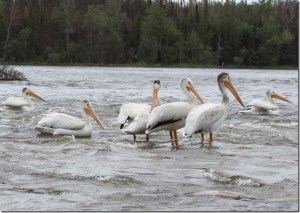
Pelicans on Lake Winnipeg, photo credit The Wilderness ClassroomOver the last few months I have been feeling some frustration at the slow progress we seem to be making on helping to restore the health of Lake Winnipeg. I know I’m not alone as many others have expressed similar frustration. As I have been working on the Lake Winnipeg Health Plan, which is a collaborative effort of many stakeholders, scientists and academics, one issue has caught my attention repeatedly and that is the contribution that human sewage is making to the problem.


One of the 8 points in the Lake Winnipeg Health Plan is the need to improve our sewage treatment, from the largest municipal sewage treatment facilities all the way down to the individual septic systems that many of us have at cottages and on rural properties. According to data from Manitoba Water Stewardship that was published back in 2006 in the Lake Winnipeg Basin Stewardship Report “Reducing Nutrient Loading to Lake Winnipeg and its Watershed” , 47% of the problem phosphorus that is feeding blue-green algae blooms in Lake Winnipeg, originates from within Manitoba’s own borders. So that is almost half of the problem within our own province and of that portion 19% is coming from municipal sewage treatment facilities, including the city of Winnipeg and other municipal sewage facilities. These are what we call point sources of phosphorus because they are emanating from a single point, making it much easier to intervene and intercept the phosphorus. Its easier to do, several technologies exist to retrieve the phosphorus, but it comes with a big price tag. As well, there is another source of phosphorus emanating from what is called Manitoba Watershed Processes, including septic fields, wildlife and forests. That segment amounts to 35% of Manitoba’s portion of phosphorus load to the lake. So overall the contribution of human sewage to our lake’s problem is significant.
Knowing this, makes me wonder why we are not taking much more urgent action to improve our existing sewage treatment systems, including the hundreds of lagoons across the province but even more importantly, why are we still allowing new developments that are not using the most progressive methods of sewage treatment.
I think many people would support contributing more tax dollars if they believed it was going directly to help improve our sewage treatment. People are shocked to learn that the effluent pumped from their holding tanks ultimately ends up in Lake Winnipeg, often without adequate means of filtering the problem phosphorus out.
So I’m left wondering – are we really serious about saving Lake Winnipeg?

Posted by: Vicki Burns | July 27, 2013

Lake Winnipeg Inspires Courageous Actions

Jay Hawranik on his stand-up paddle board

Jay Hawranik on his stand-up paddle board

Ininiw Aski Quest Welcome at the Forks

Ininiw Aski Quest being welcomed at the Forks

Love of Manitoba’s great Lake Winnipeg, which lies at the heart of Manitoba, has inspired some dramatic and courageous actions from Manitobans in recent weeks. The increasing threat of blue-green algae blooms in Lake Winnipeg and several other Manitoba lakes has drawn the attention of many people, not just in our province but around the world. A few months ago, the German Global Nature Fund designated Lake Winnipeg as Threatened Lake of 2013, worldwide. This unfortunate designation has spurred attention and action from many people who are determined to save Lake Winnipeg.

Yesterday a group of 14 First Nations people (ranging in age from 10 years old to 81 years) arrived at the Forks in Winnipeg after paddling a 32 foot canoe down the shores of Lake Winnipeg, from Cross Lake. The journey, called Ininiw Aski Quest, took 20 days and was very challenging. From big winds to a broken canoe, this group had much to contend with. But they made it safely and according to their leader, Ronnie Beardy, it has given them a great sense of accomplishment. The focus of their journey was to help their youth reconnect to nature and to the respect for Mother Earth, that dominated their ancestors’ spirituality. Their special focus this year was the threatened state of Lake Winnipeg. I was at the Forks for the welcoming ceremony and it was a very proud and moving tribute these people received. I was inspired by their commitment, their willingness to endure physical hardships and their recognition of the essential importance of protecting our precious lake.

Today, a young man, Jay Hawranik from Grand Marais, made a brave attempt to cross Lake Winnipeg on his stand-up paddle board. The big wind and waves on our powerful Lake Winnipeg forced him to turn back but he will try again tomorrow. Jay lives on the lake’s shore and is on the water every day he possibly can be. He states in simple terms that he loves the lake and he wants to do whatever he can to spur the necessary action required to restore the health of our lake. His Paddle for a Purpose campaign is garnering lots of attention and inspiring others to get involved as well.

These are 2 examples of grass roots action that is filling me with hope that our great lake can be saved. We know some of the most important ways we can decrease the phosphorus getting into our waters (including improving sewage treatment and stopping wetland drainage). Now we need our governments to make the investments required to begin these actions.

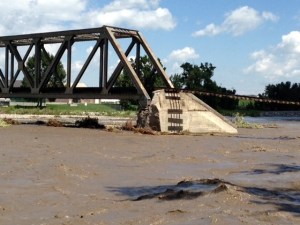
Okotoks rail bridge in Calgary, photo credit Gary East

Okotoks rail bridge in Calgary, photo credit Gary East

In recent months I’ve written several posts about how drainage of our wetlands across the Prairies is contributing to more overland flooding during heavy rain events and greater severity of spring floods. We’ve decreased tremendously the capacity of our landscapes to hold onto water and to slow its movement off the land. Now that summer heat has finally arrived, we’re awaiting the onset of one of the other big consequences of that drainage, the growth of blue-green algae blooms in our lakes. The water rushing off the land carries much phosphorus which feeds those algal blooms and the lack of wetland vegetation to filter out some of that phosphorus is a big part of the problem as well.
I was gratified to see this post from the David Suzuki Foundation “Working with nature can protect us from floods” because it spells out so clearly the benefits of working with nature in any development we do, rather than assuming we can build wherever we want. It reflects the growing recognition of the value of protecting and restoring wetlands and forests, in economic terms as well as environmental benefits. The frequency of the intense rainstorms that have caused so much flooding in Alberta and across the Prairies will likely increase as climate scientists predict. So assuring people that this is only a once in 100 year event is no longer a wise approach.

Earlier this week I made a presentation to a standing committee of the Manitoba Legislature on Bill 20 – The Manitoba Building and Renewal Funding and Fiscal Management Act. The bill is giving the government authority to raise our provincial sales tax by 1 %. One of the justifications for doing so, is the need to invest in infrastructure and flood prevention. My presentation was focused on the need to ensure that at least a portion of that money should go towards investments in natural infrastructure, wetland protection, restoration and other small water retention and phosphorus capture ponds. The beauty of investing in that type of natural infrastructure, is that it will help reduce flood risks, will build in resiliency for droughts and will help keep our lakes clean at the same time as keeping water on the land, rather than moving it off to become someone else’s problem.

Flooded road

Flooded road

In the last few days I’ve come across some news items that capture, in heartbreaking ways, the consequences of not keeping water on the land. This article from the Morden Times in southern Manitoba, quotes 2 farmers who are very clear on the damage that upland drainage is doing to their property. Even more tragic are the 2 deaths that have occurred in Manitoba recently as a result of washed out roads. Overland flooding is creating life threatening hazards, damaging farmlands, destroying homes and creating economic havoc.
Next week on June 20 the Lake Winnipeg Foundation, along with Ducks Unlimited, The Manitoba Conservation Districts Association and the Manitoba Eco-Network , are hosting our second workshop called Keeping Water on the Land. Its all about how we need to slow down the flow of water off our landscapes during spring melts, and big rainstorms. Why? Because with all the drainage of wetlands that has occurred over the past few decades, we are facilitating more flooding downstream, carrying more phosphorus off the land into our lakes and losing all that valuable water during times of drought. We’re working hard to get more awareness built amongst Manitobans so that we can encourage our governments to invest in protecting wetlands, restoring some wetlands and building on-farm water retention ponds. Another way of describing it is investing in rebuilding “natural infrastructure”.
So I hope we can encourage many people to attend our Keeping Water on the Land workshop on June 20 – registration and more details are available at Manitoba Water Caucus. If you’re interested in helping Lake Winnipeg or just want to make sure that you don’t have to pay huge flood disaster bills out of our tax dollars, this is the workshop to come to!

Manitoba's Boreal , photo courtesy of Liberals blogspot

Manitoba’s Boreal , photo courtesy of Liberals blogspot

I have to confess that its only recently that I have understood the important connection between the boreal region and the quality of water in Lake Winnipeg. Those of us working on water issues in Manitoba tend to focus so much on what is causing the growth of huge blue-green algae blooms on the lake that we don’t pay much attention to what is helping the lake from becoming even more polluted with cyanobacteria( blue-green algae).
The boreal that surrounds almost 80% of Lake Winnipeg is an area that is comprised largely of coniferous forests, particularly spruce, interspersed with vast wetlands. The rivers on the east side of the lake provide clean water to the lake, with little phosphorus content , because they are flowing mostly through areas that have very little human development. There are some First Nation communities on the east side of the lake who are working hard right now to keep the boreal in that area from being disturbed. They are seeking a UNESCO World Heritage Site designation and I hope they can be successful in that quest.

According to this CPAWS publication “The proposed World Heritage Site area is called Pimachiowin Aki (pronounced‘Pim–MATCH–cho–win Ahh–KEY’) which is Ojibwe for “the land that gives life.” Considering the Boreal region is the world’s largest source of fresh water, the northern lungs of the planet, gives clean water to Lake Winnipeg, and provides sustenance for many local First Nations, this title couldn’t be more accurate.”

Many years ago during my first job after university, I had the opportunity to fly around much of northern Manitoba visiting many of the First Nation communities in that area. At that time, I had no idea how valuable the miles and miles of forest and wetlands were, in terms of giving us clean water and fresh air. I understand now that this really is “the land that gives life”.

« Newer Posts - Older Posts »

Categories