The province of Manitoba today( June 11, 2014) announced a comprehensive new approach to surface water management  which will benefit water quality in our lakes, decrease flood severity and build in some preparation for droughts. In a nutshell, the most important piece of news is much stronger regulation and protection of various types of wetlands. They have created a document, Towards Sustainable Drainage, and are asking for public comments on it till December 2014.
This is a very important step in helping Lake Winnipeg and other Manitoba lakes because it means that wetlands that still exist will not be drained unless there is an urgent need to do so and if that does occur, there will have to be substantial compensation in order to recreate the ecological benefits provided by that wetland. I think the easiest way to explain why wetlands are so important, is to describe them as nature’s kidneys. They filter out much of what we don’t want getting into our lakes, including the phosphorus and nitrogen that are fuelling the increased blue-green algae blooms. They also act like sponges, soaking up water and releasing it slowly which is why they are helpful in decreasing the overall severity of floods and droughts.
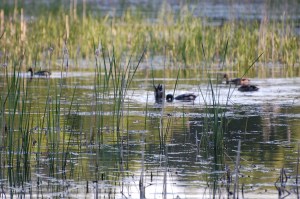
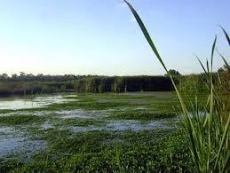
Wetland, photo courtesy of Ducks Unlimited Canada

Wetland, photo courtesy of Ducks Unlimited Canada

However, before we jump to thinking our lakes’ problems have been solved, we need to remember that this new approach will prevent further damage by protecting existing wetlands. It does not yet move into the area of restoring the 70% of wetlands that have been drained over the past century. So the amount of phosphorus that is currently getting into our lakes through non-point sources from the landscape will not decrease until we can recreate some of the filtering capacity that those drained wetlands used to provide. And of course, I’ll be a broken record now and repeat once again, that we need to get going on addressing the point sources of phosphorus, primarily our sewage treatment.
To sum up though, I think the Manitoba government should be congratulated on bringing forward this new, progressive approach. It has multiple benefits and future generations will be glad that this government started to really turn around how we had been managing water.

The Grade 8 class from Tanner’s Crossing School in Minnedosa, Manitoba have studied the challenges of blue-green algae threatening Lake Winnipeg and have created colourful books filled with imaginative stories. I visited their school recently and was so impressed with the knowledge they have acquired and the creativity they utilized to put the facts into story form. Following my presentation to them, they impressed me even more with how much they understood about what we need to do to stop degrading our lakes with too much blue-green algae.

Grade 8 Calss with Saving Lake Winnipeg books, Tanner's Crossing School

Grade 8 Calss with Saving Lake Winnipeg books, Tanner’s Crossing School

As many of us know, education and inspiring our youth is the hope for a brighter future. I think that one of the most important things we can do is to help young people understand the potential of each one of us to create the changes we need to secure a more sustainable future on this planet. The students I met in Minnedosa are well on their way to understanding that.
One of the issues we talked about was the importance of doing absolutely the best job we can in treating our human sewage before releasing it back into whatever river or stream will carry it away. As their teacher said, sometimes the cheapest way is not the best for the long-term. Nothing could be truer when it comes to our conventional sewage treatment. Saving money now is adding hugely to the costs that will be borne by our children and grandchildren. I, personally, don’t feel very good about that and I hope our city council in Winnipeg will start to understand this as well.

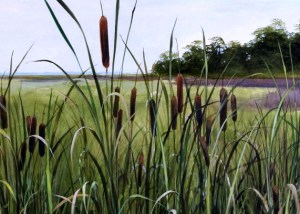
Cattails in Marsh

Cattails in Marsh

Recently I attended a demonstration of an end product of IISD’s Bioeconomy project, the harvesting of cattails and  native grasses to make pellets for producing heat energy in a pellet burning stove. The burning of these pellets has been used this past winter to heat the Living Prairie Museum in Winnipeg and on the day of the presentation, the heat produced was very comforting and more than adequate!
This project is a great example of turning biomass into a usable and sustainable energy source. It is an area that is particularly close to my heart as my father, Ernie Robertson, started the Biomass Energy Institute back in 1970 to encourage research and development in the use of alternative energy sources. The goal was to allow us to move away from our dependence on fossil fuels. At the time many people called him “crazy Ernie” but now his ideas are being well recognized as we realize that there is no time to waste in diversifying our energy sources.

Pellet Stove Burning photo courtesy of IISD

Pellet Stove Burning photo courtesy of IISD

In addition, there are other important benefits to the harvesting of cattails and other native grasses, and those relate to the ability of cattails to take in phosphorus, thereby preventing it from getting into our waterways and feeding blue-green algae blooms. The threats of blue-green algae blooms are increasing in lakes all across North America and elsewhere in the world so projects like the Cattails for Clean Waterways can have benefits in multiple locations. The economic opportunities of creating a new heating source at the same time as helping to clean our lakes, is really exciting. Personally, I would love to get a pellet stove and warm myself on our cold winter nights, all the while knowing that this is helping to clean our waterways at the same time. Check out this video from IISD if you want to know more about this project.

I’ve written about the challenges of blue-green algae in Florida in previous posts because having a personal connection with this area causes me to pay close attention to any news from there. My parents had the privilege of enjoying winters in Florida for 25 years after they retired and other family members continue that tradition now.
This post from Earthjustice came to my attention recently and although it is not heralding good news, I was pleased to see the straightforward information about what is causing the increase in blue-green algae blooms and in particular this message “This pollution is preventable. Now that we know how the nitrogen and phosphorus in sewage, manure and fertilizer tip Florida’s delicate ecological balance, we have a responsibility to do something about it.”

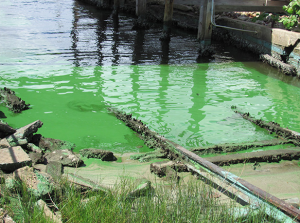
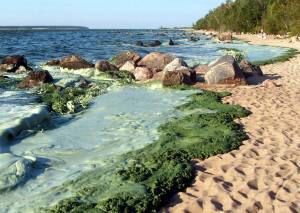
St. Lucie River Florida, photo courtesy of Dick Miller Earthjustice

St. Lucie River Florida, photo courtesy of Dick Miller Earthjustice

That message is relevant across North America, and nowhere is it more applicable than here in Manitoba, home to Lake Winnipeg – the 10th largest lake in the world and one of the most threatened lakes. I know that many thousands of people are concerned about the state of our lake but they don’t know what can be done to turn things around. My goal is to offer the information I’ve learned in hopes of letting people know that the solutions exist. We just need to get going on putting them into place and the very first should be upgrading our sewage treatment in both cities and rural areas. Addressing point sources of phosphorus( sewage treatment) should be a “no brainer” but often is not because of the cost.
Florida has been a welcome reprieve from our icy winters for over a century now. I hope we can count on that continuing without worry about toxic algae blooms threatening the landscape.

One of the goals I have in writing this blog is to take what I hear from scientists and other environmental professionals, and turn it into information that the general public can understand. It is so easy for professionals to use the language and jargon that is common in their field and not alter it when speaking to others. Although it is understandable why this happens, it can impede getting the correct information and message out to the public, to policy-makers and to our elected officials.
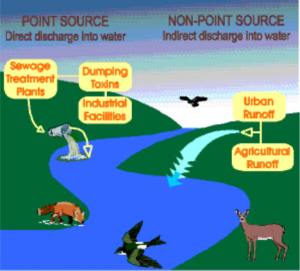
In water and lake protection work, understanding where the problem elements and pollutants are coming from is key to being able to stop them getting into the water. In particular, with the challenge of blue-green algae blooms (some of which contain dangerous toxins) the problem elements are phosphorus and to a lesser extent , nitrogen. Amongst the science and conservation professionals, we often hear the terms point source and nonpoint source phosphorus used but most of the general public are not familiar with those terms. If we are to gain support for investments in decreasing phosphorus and nitrogen getting into our lakes, we need to broaden the understanding of the point source vs. nonpoint source terms. Why – because the methods for intervening are very different and although, both sources need to be decreased it is much easier to start with the point sources.

Point Source & Nonpoint Source  image courtesy of t4-1contaminants blogspot

Point Source & Nonpoint Source
image courtesy of t4-1contaminants blogspot

The U.S. Environmental Protection Agency (EPA)” defines point source pollution as any single identifiable source of pollution from which pollutants are discharged, such as a pipe, ditch, ship or factory smokestack. Factories and sewage treatment plants are two common types of point sources” when we are discussing water pollution and blue-green algae blooms.
The U.S. EPA defines nonpoint source (NPS)as “coming  from many diffuse sources. NPS pollution is caused by rainfall or snowmelt moving over and through the ground. As the runoff moves, it picks up and carries away natural and human-made pollutants, finally depositing them into lakes, rivers, wetlands, coastal waters, and even our underground sources of drinking water.”
In future blogs, I’ll discuss why and how we should be decreasing impacts from our point sources of phosphorus more effectively and then, get working  on the nonpoint sources.

I just came across this article about the extent of harmful algae blooms in almost every water body on Long Island last summer. Dr. Chris Gobler, from Stonybrook South Hampton, was giving a lecture on the deteriorating state of waterways in that area and it caught my attention because there are so many similarities to what is going on here in Manitoba with Lake Winnipeg and other lakes suffering under a growing algal load.

Algae on Long Island waterway

Algae in Marratooka Pond, Long Island, photo courtesy of the East End Beacon

There is one major difference though and that is the focus on nitrogen in the Long Island area versus our focus on phosphorus here on the Prairies. I understand that nitrogen is more of the problem element in areas where saltwater is involved while our focus for freshwater lakes is on limiting phosphorus. However the similarities are very strong regarding where the problems are emanating from – according to Dr. Gobler – human wastewater and agricultural fertilizer.
It reinforces my belief that throughout North America we need to adopt much more effective wastewater treatment systems and BMPs (best management practices) in agriculture. The longer we wait, the more it will cost in the end both economically and environmentally.

Posted by: Vicki Burns | February 12, 2014

Severe Flooding in Britain Raises Familiar Questions

The terrible flooding that has hit southwest England in the last few days caught my attention, first because we have visited there just a few months ago and secondly because some of the questions raised are similar to what we face here in Manitoba. We visited Cornwall in October 2013 and were so impressed with the beauty of the terrain and the charm of the old seaside towns. It’s amazing to realize that the railway we traveled to get from London to Cornwall has been cut off due to damage from flooding.

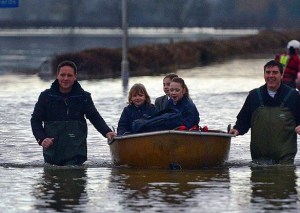
Flooding in Windsor 2014

Flooding in Windsor 2014

High tides, strong winds and the rainiest season in 248 years have combined to create terrible flooding in parts of Britain. According to a report from the chief scientist 10 years ago, Sir David King, “Hard choices need to be taken – we must either invest more in sustainable approaches to flood and coastal management or learn to live with increased flooding.” At that time, scientists were predicting that the kind of flooding we’re seeing today would be occurring in the 2030’s due to climate change but apparently it’s happening much more quickly.

What really twigged my interest in this was the idea, presented in the Guardian article,that we could do something to decrease the overall severity of flooding with “natural flood management, based on working with natural processes to increase infiltration, detain water within headwater catchments and restore meanders and large wood in rivers (even perhaps reintroducing beavers to manage that wood) can help”. These concepts are very similar to what we have been promoting here in terms of “keeping water on the land” using wetlands and other constructed water retention areas. As well, in Britain they are discussing the need to replace Victorian era combined sewer systems that are subject to overflow in these heavy rain events, a problem that is occurring all too often here in Winnipeg and other Canadian cities.

We are faced with very similar challenges and some solutions can also be similar but for now, I hope our British friends do not suffer greatly from further flooding.

Sailboards on Lake Winnipeg

Sailboards on Lake Winnipeg

It’s been one year since the Global Nature Fund chose Lake Winnipeg as the Threatened Lake of 2013 worldwide due to the extensive blue-green algae blooms that are fouling the lake every year and over 35 years since scientists have been ringing alarm bells . Although Lake Winnipeg is only one of many lakes around the world suffering from this growing threat, it is the 10th largest lake in the world and Canada’s 6th Great Lake so it draws international attention.

“If there has been any progress in cutting the amount of phosphorus that is getting into the lake, we don’t know about it” says Vicki Burns, spokesperson for the Save Lake Winnipeg Project. “We have not seen any data on the annual amounts of phosphorus going into the lake for 7 years, even though government staff is collecting the data every year. That is simply too long”.

Some blue-green algae blooms contain toxins that are very dangerous to both animals and humans. Over the past year, there has been new research from Oregon State University finding that the toxicity in blue-green algae blooms is increasing and from Australia linking a toxin found in some blue-green algae, BMAA, to motor neuron disease such as ALS, Alzheimers and Parkinsons.

“The threats associated with blue-green algae blooms are growing” says Vicki Burns. “We need action now to stop this unhealthy trend. Another year has passed since the Threatened Lake Designation and we still cannot measure any progress.”

When questioned on progress made since the Global Nature Fund designation, Living Lakes Canada advisor Bob Sandford said: “I am deeply concerned about two matters in particular. First, I don’t think the average Manitoban has any idea of how serious this problem has become and how much it may impact the prosperity of the province and region in the future. Second, Manitobans have yet to realize that governments can’t solve a problem of this magnitude on their own. While the will clearly appears to exist to organize around solutions, critical players remain absent from the table resulting in efforts remaining largely atomized for want of broader commitment and adequate funding and support. But there is progress.”

To start, the Save Lake Winnipeg Project is calling for a commitment from all 3 levels of government to invest in upgraded sewage treatment for all Manitoba sources within the next 10 years; and a commitment to release annual data about the amount of phosphorus entering the lake.

Posted by: Vicki Burns | January 16, 2014

Algae Warnings Spoiling Some Florida Vacations

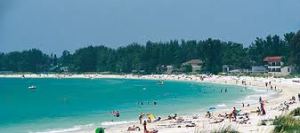
I was sent this article about bad algal blooms along the southwest coast of Florida, in particular Fort Myers Beach. Its an area that I have some personal connection with as members of my family have been enjoying wintering near there for several decades. I had personal experience with some red tide blooms in the fall of 2012 while visiting and after looking into it, realized that the causes of blue-green algae, macroalgae ( as reported in this article) and red tide(Karenia brevis) are very similar. They’re all brought about by too much nutrient( phosphorus and nitrogen) running off our landscapes and getting into the water.

Bonita Beach, photo courtesy of Travel Tidings Florida

Bonita Beach, photo courtesy of Travel Tidings Florida

Today I received another piece of news from an area close to Fort Myers, Port Charlotte, where they are commenting on the fact that they’ve already spent $2million over the past year trying to remove thick blue-green algae from the Sunrise Waterway in Port Charlotte but they anticipate it will cost an additional $1million to complete the work. There is no mention of how they plan to stop the continual growth of the algae that is fed by too much phosphorus and nitrogen, coming from sewage, fertilizers, animal waste and run-off from the land.
The costs of not intercepting the excess nutrients of phosphorus and nitrogen at source, are building in so many areas around North America. I don’t often see reports about blue-green algae blooms in some of the European countries that have invested heavily in upgrading their sewage treatment and in managing their animal manure in very careful ways.  I hope to learn more about that in the near future and share what I’ve learned. There is so much more we could be doing in this part of the world and so many good reasons to get going on it sooner rather than later.

Over the past 3 years I have written several blog posts about wetland drainage and how it is contributing to a number of water related challenges in Manitoba. However, I’ve come to believe that its still a subject that many people don’t know much about so when I receive a great article like this one, “I Didn’t Know Wetlands Did That!” by Jim Ringelman, a retired scientist from Ducks Unlimited in North Dakota, I want to share it as widely as possible and encourage people to read it.

image of green vegetation arund a marshy area

Wetland Holding Water

Jim has written that 45% of the wetlands in North Dakota have been drained over the past century since this land was settled. North of the border here in Canada, our Ducks Unlimited scientists estimate that its up to 70 % that have been drained. Jim does a great job of explaining the “kidney like” function of wetlands and how we’ve lost that large percentage of the filtering capacity so that more of the phosphorus, nitrogen and other elements that we don’t want getting into our rivers and lakes, are indeed ending up there. Included in this article is a picture of a blue-green algae bloom fouling Victoria Beach on Lake Winnipeg a couple of years ago.
One of the other major services that wetlands provide to us, is their ability to act like sponges – soaking up water and releasing it slowly. There are some really impressive numbers that Jim quotes about the amount of water that could have been slowed down and held back during some of the recent spring floods. This should resonate with us because we’re experiencing so many more floods both in spring and during big storms. Flash floods have been creating havoc in many areas across the Prairies.

Blue-green algae Lake Winnipeg

Blue-green algae Lake Winnipeg

In my home province of Manitoba, we are awaiting some new regulations about the drainage of wetlands. With information like what is included in this article, it shouldn’t be too difficult for the public to understand why we can’t afford to continue with the status quo. We simply can’t bear the costs both to our wallets and to our natural landscapes when we alter nature’s ways of handling water.

« Newer Posts - Older Posts »

Categories