A few weeks ago I had the pleasure of meeting with the staff at the Winnipeg office of the Red River Basin Commission( RRBC). Robin Gislason and Sara Perlmutter filled me in on the work being done across both sides of the border to promote watershed stewardship and management. This is no simple task given that there are 3 American states , South Dakota, North Dakota and Minnesota as well as the province of Manitoba in Canada who all share the Red River Basin.  

Here are some of the things they told me about the Red River and the work of the RRBC.  
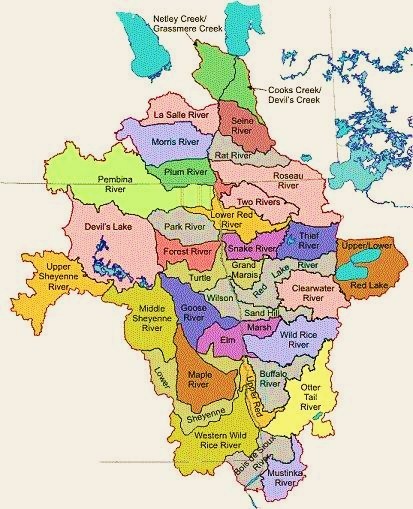
image of map of all the rivers in the Red River Basin

Red River Basin map


“From its source at Lake Traverse in South Dakota, the mighty Red River flows north through North Dakota, Minnesota and Southern Manitoba to Lake Winnipeg, the 10th largest freshwater lake in the world. It meanders through the fertile, flat valley of the former glacial Lake Agassiz. The Basin’s unique topography contributes to the frequent flooding experienced by the communities in the Basin. Water quality and drought are also key concerns within the Basin.  

Land and water resources are crucial to the health of our economies, the resilience and prosperity of our communities, the health of our fish and wildlife, and the well being, health and enjoyment of everyone who lives, works and visits the Basin. The Red River Basin is a special place and keeping it that way requires that people share the responsibility for its future. The Red River Basin Commission (RRBC) has been bringing people together to move common Basin goals forward for over two decades.  

Current RRBC projects include a SharePoint site (an inventory of Basin water projects)  (under “RRBC Basin Inventory”) and a Success Story Blog which highlights particularly unique and successful water and land management projects in the Basin .”  

Sounds like there could be a productive link between community foundations in the Red River Basin and the sub-committees spread throughout the basin. We’re all working to ensure healthy communities and the Red River connects many of us.
When I asked Dawn Harris, the Executive Director of the Manitoba Conservation Districts Association, to describe in a nutshell what their focus was she said they cover the “waterfront” with the variety of work they do. There are currently 18 Conservation Districts in Manitoba, covering 80 to 85% of Agro-Manitoba, and they have taken on the overall responsibility for developing watershed management plans for their areas. 

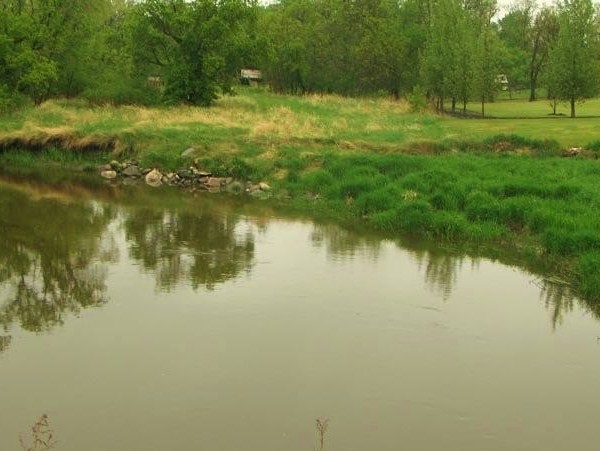
image of river with green fields and trees on the shore

Rat River in the Seine-Rat River Conservation District


They focus on everything that has to do with maintaining water quality and quantity to ensure that we have good, clean water and the amount of water that we need now and for future generations. The 18 Conservation Districts are each independent and the projects they work on can vary from one to the other. 

Some examples of work that they engage in are: taking water samples from private wells; wetland restoration; riverbank erosion prevention and mediation; education presentations to schools; Water Festivals; improving surface water management to ensure not too much or too little drainage. 

The funding for the Conservation Districts comes from both the provincial government and the local municipalities. However they are often seeking other grants to assist with the many projects associated with good watershed management. Sounds like there could be a good link between Conservation Districts and Manitoba  Community Foundations – they are both working to ensure healthy communities for all of us.


Here is a great article Nutrient Overload Killing Lake Winnipeg by Paul Hanley writing for the StarPhoenix in Saskatoon, Saskatchewan. His main message is that what happens to water in Saskatoon is connected to what happens in Lake Winnipeg. The excess nutrients, phosphorus and nitrogen, that contribute to the huge blooms of toxic blue-green algae in Lake Winnipeg are coming from a multitude of sources including the city of Saskatoon.
Its refreshing to see someone outside of Manitoba taking  some responsibility for the problems of Manitoba’s great Lake Winnipeg. Its only through our combined actions that we will see an improvement in water quality in Lake Winnipeg and other water bodies across the Prairies. Here is a simple list of things we can start with to protect our precious water now and for future generations: 

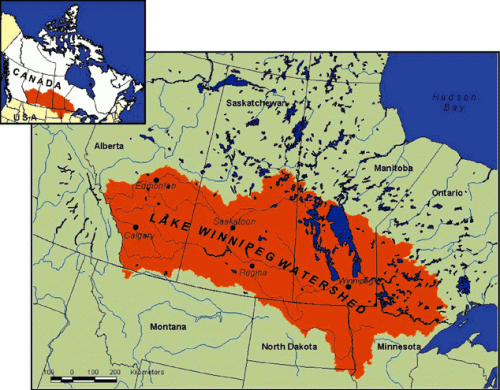
image of map of western Canada tuling the Lake Winnipeg Watershed

Map of Lake Winnipeg Watershed, almost 1 million sq. km.


 1. Reduce your use of phosphorus in household cleaners and soaps. Use Lake Friendly Products.
2.  Create an environmentally friendly lawn and garden. Stop using cosmetic pesticides and chemical fertilizers. Use compost and consider a rain garden. 

3. Restore your shoreline to a more natural state. Leave a buffer strip of natural vegetation on your property, aquatic plants in the water and rocks on the lake bed. These actions will improve water quality and reduce erosion because the plants act as a filter for nutrients and other contaminants running off the land. 

4. Ensure that your septic system is in good shape, with no leaks. Poorly maintained septic systems can contaminate groundwater that can travel underground and contaminate wells and ultimately surface waters like the lake.Consider installing a composting toilet. 

5. Do not flush anything down the toilet that shouldn’t traditionally go down the toilet. Waste water treatment systems are designed to treat human waste, not medications and chemicals. Once treated the effluent from waste lagoons and water treatment systems ends up being released into rivers and ultimately ends up in the lake. 

6. Stop wasting water. Save money and water. Every drop of water that goes through our wastewater treatment systems causes wear and tear and more money. Install dual flush toilets and low flow showerheads. 

7. Preserve or reconstruct wetlands. Wetlands are like nature’s kidneys in that they provide tremendous filtration of some of the excess nutrients and pollutants that are fouling our waterways. They also decrease flooding in heavy rainstorms. 
8. Encourage city council to adopt Low Impact Development principles and invest in the best possible wastewater treatment systems, including managing stormwater events without dumping raw sewage into the river.

Yesterday I was talking with a friend who has 2 young children. She mentioned being at 2 different beaches over the last few weeks, Gimli on Lake Winnipeg and Pelican Lake in southwestern Manitoba. She was disappointed to see advisory notices go up at both places, cautioning about the presence of ecoli as well as an algae advisory. The friends she was with told her that it was nothing to worry about and the children could still go swimming. 

image of sign warning of water quality problems on beach

Beach advisory sign at Gimli


That tells me once again that we have a lot of educating to do to inform the public about the impacts of certain levels of ecoli and algae in the water. The Manitoba government  does provide regular updates about all of this, as of today there were 7 beaches, 5 on Lake Winnipeg and one at Killarney Lake and Pelican Lake that have been posted for higher than safe levels of ecoli at various times this summer. There are also 7 beaches all on Lake Winnipeg that have been posted with algae warnings. Caution should definitely be used when these advisories are  in place, particularly with children as they tend to swallow a lot of water in their play. 

 Ecoli can certainly cause significant intestinal illness and some blue-green algae contain toxins which are very threatening to the liver and other organs. Animals are particularly susceptible to illness, even death, if they ingest blue-green algae. Remember dogs tend to lick their paws and fur after being in the water which is why we’ve heard of several dogs deaths related to this. 

The bottom line is that there are good reasons why governments are now testing and posting results of water sampling at beaches. Public health is and should be of prime concern.

Posted by: Vicki Burns | August 3, 2010

Blue-green Algae Takes Over Victoria Beach on Lake Winnipeg

The large blue-green algae blooms that were seen in satellite photos of Lake Winnipeg last week landed on the shores at Victoria Beach this past weekend, marring a summer long weekend for the many cottagers there. Check out this CTV video of the algae at Balsam Harbour a few miles south of Victoria Beach.

However its more threatening than just preventing swimming. These algae blooms are going to continue to grow until we decrease the excess phosphorus and nitrogen that is getting into the lake. 

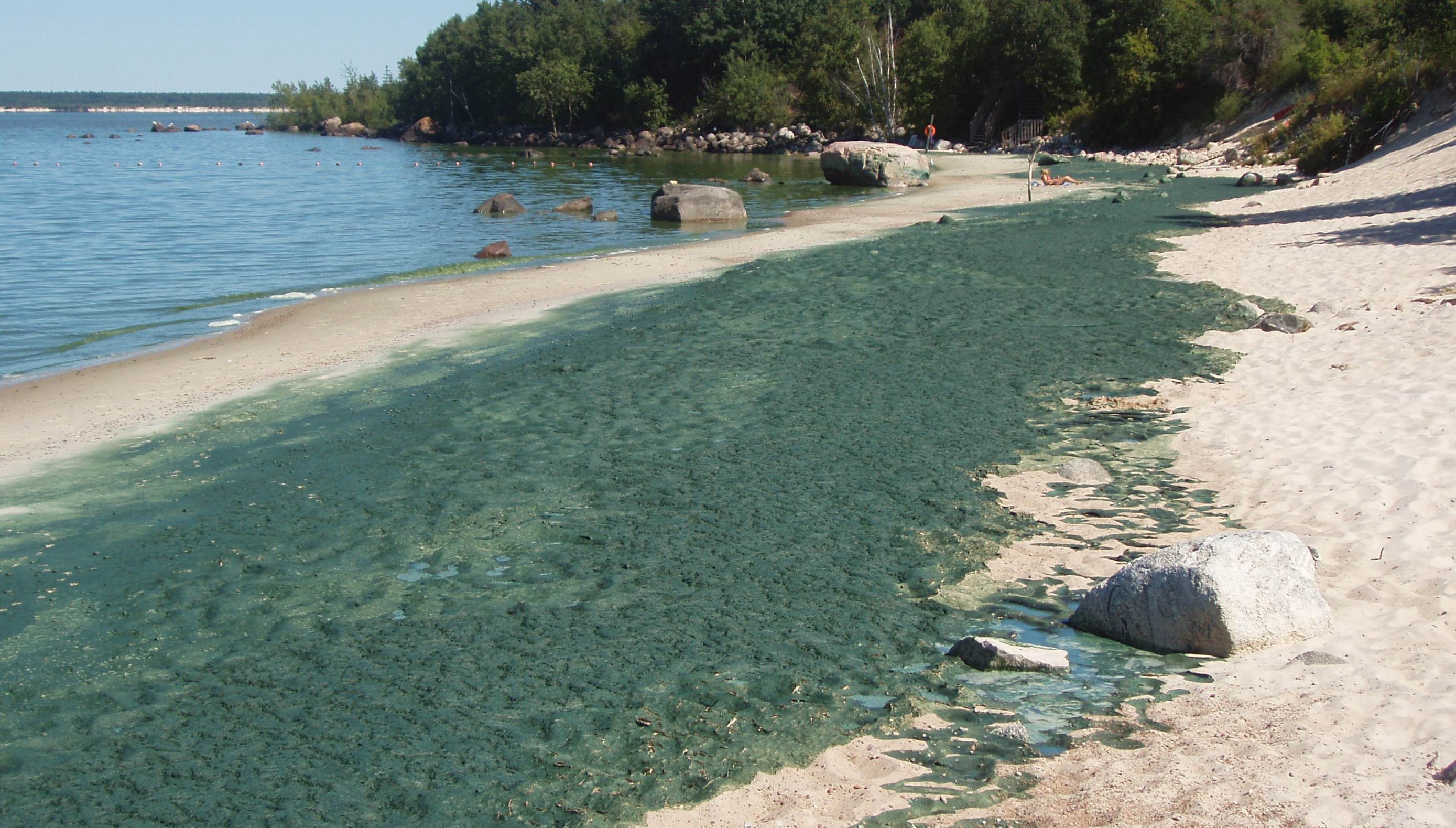
image of dried blue-green algae washed up on the beach

Dried up blue-green algae on the beach

 One of the frustrating things about this problem is that some of us know how to decrease the excess nutrients but the majority of people are still unaware that they can play a role in solving this problem. We do need a major public education program across the country to help everyone to understand that there are many simple things we can each do to help fix this problem.

I had the opportunity to take a trip on the Namao, the research ship of the Lake Winnipeg Research Consortium, earlier this week. It was very interesting to see some of the water sampling being conducted at several stations around the lake. 

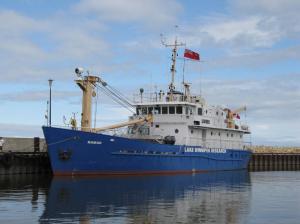
image of the Namao tied up in the Gimli Harbour

Namao at dock in Gimli


The satellite images on the LWRC’s website have drawn attention to the large blue-green algae bloom that is appearing in the north basin of Lake Winnipeg and pointed out as well, the bloom that was starting to develop around Grand Beach. That bloom became all too obvious to people visiting the beach last weekend. 

I was curious to learn how common these blue-green algae blooms are becoming and was not too surprised to see warnings about them in several American states, Oregon, Ohio and Iowa, most recently. Some of the  blue-green algae contain Microcystin – LR which contains toxins affecting the liver and other organs. So it is potentially a serious health threat to both humans and animals, with several documented cases of dogs dying after going into water with blue-green algae present. 

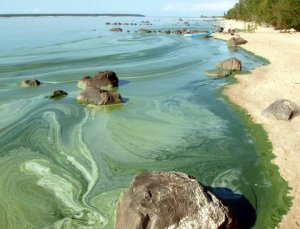
image of blue-green algae washing up on beach

Blue-green algae on beach at Lake Winnipeg


I’m interested in learning about where else in Canada there are blue green algae problems so let me know if there algae problems near you. This is a significant problem that we can all be part of fixing!

Yesterday I had the opportunity to meet a three generation family of fishermen, the Kristjansons, from Gimli whose family have made their living fishing on Lake Winnipeg since 1891. Robert T. Kristjanson , the senior of the family, has been a vocal advocate for action to clean up Lake Winnipeg for a number of years now. He remembers as a child that he used to be able to dip his cup into the lake whenever he wanted a drink of water. He doesn’t think that anyone feels comfortable doing that these days though. 

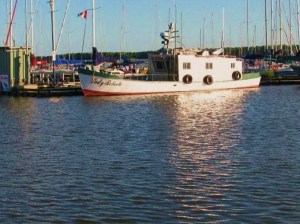
image of commercial fishing boat in Gimli Harbour

The Lady Roberta, Kristjanson Family Fishing Boat


Kris, his son and Trevor, his grandson went fishing in the north basin of the lake at the end of May into early June and encountered something they’d never experienced before. So much “dirt” on their nets that they weren’t able to catch any fish. The dirt they were referring to was algae that turns black after dying. In the areas they were fishing the dirt was so thick that it coated their nets and the fish were able to see the nets and avoid being caught. 

image of algae sludge on beach

Close up of algae sludge on beach


They had to go further a field to get away from the thick algae dirt and get a decent catch. So although generally the catch for fishermen is plentiful, there are concrete signs that the current situation is not sustainable and will ultimately interfere with the fishermens’ ability to make a living. 

Makes me think there is not a moment to waste in our quest to clean up the Lake Winnipeg Watershed.

A few weeks ago members of the Manitoba Water Council set off on a cross country tour of Manitoba, holding public meetings in various locations. Their goal was to solicit feedback from the public on how our province should handle the important issues of wetlands – restoration and protection. 

image of wetland with grassy shore and blue sky

Wetland scene


In a year when we have experienced torrential downpours and flash floods, the issue of getting water off the land is top of mind in many rural areas. It sometimes seems contradictory to be talking about wetland restoration at the same time as we’re hearing about the need for better drainage. However wetlands are nature’s way of slowing water down in times of heavy rains and holding onto it so that it more slowly drains away while refreshing underground aquifers. And considering that we have lost almost 70% of wetlands( sometimes called Nature’s Kidneys)  across the Prairies, this is a very serious issue. 

Personally, I think its time for our governments, both provincial and federal , to subsidize landowners for both protecting and restoring wetlands. We now understand so much more about their value in maintaining healthy watersheds. Let’s put some of our tax dollars to work in concrete ways to restore some of nature’s own watershed protection. 

You can access the Water Council’s Wetlands Workbook and Questionnaire online. They really want to hear from as many of us as possible so please add your voice to this important issue . 

Ducks Unlimited is a terrific source of information about the role and functioning of wetlands. Bob Grant,Manitoba’s Ducks Unlimited Manager, has explained the role of wetlands in decreasing flooding in a very easy to understand piece in the Winnipeg Free Press today. Just one more confirmation that we need to reverse the direction we’ve been going in for the last few decades in relation to drainage and wetland loss.

Mark your calendars for August 8 to join in the Lake Winnipeg Foundation’s Annual Walk-A-Thon. This year the locations for the walk have expanded to include Matlock, Gimli, Grindstone, and Victoria Beach. The goals of this Walk for Water are to raise money for projects related to restoring the health of Lake Winnipeg and to raise awareness about the problems the lake faces and how we can all help to fix it. 

image of catamaran sailboat at dock on Lake

Hecla Harbour, Lake Winnipeg


The Lake Winnipeg Foundation is a grassroots charitable  organization started by a group of concerned citizens five years ago.They are dedicated stewards of the lake from all walks of life, united in ensuring there’s a healthy lake for future generations.  

Accordindg to the Lake Winnipeg Foundation, cleaning up Lake Winnipeg is not going to be a quick fix.  It will take a long time, perhaps a generation, but it can only be done if everyone helps. What happens in our watershed can adversely affect our lake.  The Lake Winnipeg Watershed spans four provinces (AB, SK, ON and MB) plus four states (ND, SD, MN and MT)…with well over 6 million people in it!  We are all responsible for the problems in Lake Winnipeg, and we must all be part of the solutions. 

So how about starting to help by going online to get a pledge form and do your part to raise funds for the Lake.

Its exciting to see The Winnipeg Foundation taking concrete action to help many Winnipeg organizations become more environmentally friendly. 

 A few months ago they announced their new EnviroGrants program and Megan Tate, Community Grants Coordinator, said they were really pleased with the response from the community. “As part of our most recent strategic plan, The Winnipeg Foundation identified environmental sustainability as a priority for the organization. We realized if we were trying to become more “green”, there were probably other non-profit organizations who shared our goal.  EnviroGrants was created so the Foundation could support those groups in their efforts.” 

image of bathroom with low flow toilet and tap

Low flow toilet and taps


 Water Conservation is one of the 4 key areas targeted for the EnviroGrants and if you look at the list of grants approved already, you can see that many organizations have taken advantage of that key area. Helping charitable organizations to stop wasting water through funding low flow toilets and fixtures, is a tangible way for foundations to help Canadians better protect our precious water. 

Congratulations to The Winnipeg Foundation for setting this great example.

« Newer Posts - Older Posts »

Categories