Posted by: Vicki Burns | December 2, 2010

Lake Winnipeg Basin Summit Ends with Urgent Call to Action

I just returned from attending the 2 day Lake Winnipeg Basin Summit which was organized by the Water Innovation Centre of  IISD, the International Institute for Sustainable Development. The summit was attended by 150 people representing a broad range of professions, organizations, businesses and governments, most of whom are deeply concerned about the deteriorating state of Lake Winnipeg. The 2 days were organized around various presentations with table discussions regularly interspersed. It was very much a “participatory” meeting with a clear goal of ending with a sense of direction for next steps.
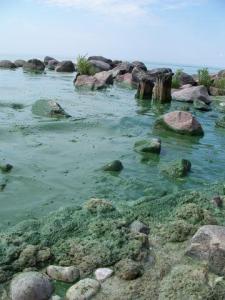
image of rocks in lake coated with algae

Blue-green algae Lake Winnipeg 2010

There were several very informative presentations throughout the 2 days but the most striking was delivered by  Bob Sandford, EPCOR Chair of the UN Water for Life Decade, who has a broad knowledge of water issues across Canada. He didn’t pull any punches when he called the situation in Lake Winnipeg an international environmental catastrophe which is getting worse. The sheer size of the problem ( blue-green algal blooms that can be up to 160 kms long) in Lake Winnipeg, the 10th largest freshwater lake in the world, make it one of the largest environmental crises in the world. This is not a distinction that I or many Manitobans are proud of.
There was a very distinct sense of urgency expressed by many of the participants at the summit and this was only heightened by Bob Sandford’s presentation. Many of us are frustrated at the lack of action in areas where we already know what needs to be done. But there was also a strong sense of hope by the end of the meeting because so many agreed on a few critical next steps. The very first was to “recruit” a champion/leader for this Lake Winnipeg Basin work. There is no question that we need an organization with a credible leader at the helm to push forward and to bring together the various stakeholders who can initiate the changes we need on many fronts. I’ll keep you posted on progress in this area over the next few months.

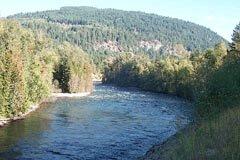
image of turtle's head covered in oil

Sea Turtle covered in oil

Several months ago I posted a blog during the height of the BP oil spill in the Gulf of Mexico. At the time, I along with many other Canadians, wondered if we were any better equipped to handle an oil spill such as what we saw happening to the south of us.
 I wrote to Member of Parliament, Randy Kamp, who was the Parliamentary Secretary to the Minister of Fisheries and Oceans. He responded by saying “Natural Resources Canada is responsible for ensuring oil drilling platforms have appropriate response plans, and I can assure you that our Government has effective response mechanisms and safeguards in place in the unlikely and unfortunate event of a spill. The Canadian Coast Guard and other government agencies are well equipped to deal with any environmental event in our waters.”
Today, I read in the news that this is simply not so. An internal government audit states that the Canadian Coast Guard lacks the training, equipment and management systems to fulfill its duties to respond to offshore pollution incidents such as oil spills. The audit went on to conclude that “assurance cannot be given that the conditions exist to enable (environmental–response) services to be provided in a national consistent manner”.
I hope that this audit will help to alert the government that we need to put the brakes on any new deep sea oil drilling until we can make sure our Coast guard and other government agencies have the proper training, planning and equipment in place. The risks are just too high to ignore this warning.

A recently released poll of British Columbia residents is good news for all of us who are focussing on water issues in Canada. It confirms once again that Canadians view freshwater as our most precious natural resource. The McAllister Opinion Research Poll found that 91% of British Columbians surveyed felt that freshwater resources in their province were the most important resource and a resounding 94% felt that nature and wildlife needs related to water should be a top priority in new water rules being developed by the province of B.C.

image of river with treed hills in the background

Adams River in B.C.

I was impressed to see the Vancouver Foundation partnering with WWF-Canada in polling the public about their attitudes regarding water. When I asked Mark Gifford, the Director of Grants and Community Initiatives for the Vancouver Foundation, what motivated them to be involved he quickly responded “Water and its protection are fundamental in thinking about the long term health of our province and its residents. It made sense for the Vancouver Foundation to be involved in this initiative”.
These poll results will surely give the B.C. government the support they need to move ahead with modernizing their Water Act.

Some of the measures the public would like to see included are:
* Stricter rules for managing industrial and municipal water use (89 per
cent).
* Using science to inform water management decisions (89 per cent).
* Requiring commercial enterprises to obtain licences for groundwater use
(89 per cent).
* Requiring active monitoring and reporting of all water use by industry and
municipalities (91 per cent).

  Actually, wouldn’t it be great to see these types of considerations for water management put into a federal act for all of Canada? The same principles of protection for one of life’s most essential elements, water, should be consistent across the entire country. It’s hard to imagine a logical argument why not.

Posted by: Vicki Burns | November 16, 2010

Small Change Fund – An Opportunity to Contribute to Big Change

Recently I had a conversation with Ruth Richardson, co-founder of Small Change Fund. I was impressed and excited by the concepts she discussed. I was particularly struck by the very first sentence on their website describing what they do. “Small Change Fund empowers you to make big change with small change”.
They are offering the opportunity for grass-roots groups to showcase their projects at the same time as offering Canadians the opportunity to donate to those projects. Often, I’ve heard people expressing their frustration at not getting an idea off the ground because they just don’t have the seed money to get it going. Small Change Fund can help with that dilemma and can help donors who want to be part of the kind of grass-roots change that we need, as we move towards a more sustainable future.

image of 2 women taking water samples from the creek

Dead Horse Creek water sampling

Ruth was inspired by the work of an American group, Global Green Grants, who create opportunities by making small grants to grass-roots groups working for social and environmental justice around the world. Global Green Grants Fund has now established a global network, Green Grants Alliance of Funds, which is represented by Small Change Fund in Canada.
Small Change Fund has a number of partners including Tides Canada and LUSH handmade cosmetics, to name a few. This is really a wonderful opportunity for many grass-roots projects across the country so please pass on this link to any groups you know of in your area. I’m sure there are many groups would be excited to be able to promote their project and potentially secure funding to proceed so let’s help them to make the connection.

Posted by: Vicki Burns | November 8, 2010

Erosion on Lake Winnipeg – Natural or Hydro Induced?

Last week I posted a blog about the weather bomb that had hit Manitoba and the resulting storms on Lake Winnipeg and Lake Manitoba. Some of the southern shores of both lakes had tremendous erosion problems and many people were blaming the Manitoba Hydro regulation of Lake Winnipeg for its problems. I wondered if that was too simplistic and didn’t take into account the multitude of factors that affect lakes, including huge weather events like what we just saw.

image of collapsed sections of baordwalk along a beach

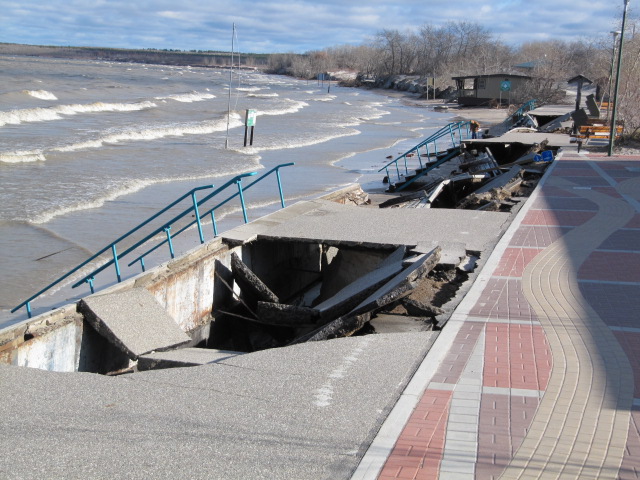
Grand Beach boardwalk collapse after storm Oct 2010

In response to that blog I received a copy of this report on Lake Winnipeg which includes some historic factors that need to be taken into account when looking at the erosion on the lake’s shores. Its written by Dr. Harvey Thorleifson , a geologist from the University of Minnesota , who is originally from western Manitoba. It is very informative, going into the history of Lake Winnipeg and explaining the concept of the lake tilting.
One of the ideas I find most interesting is his description of engineers wanting to find an engineering solution to erosion by building some type of shoreline protection while geologists tend to recommend backing off and respecting the forces of nature. Dr. Thorleifson’s report is well worth reading for anyone who wants to learn more about this issue that’s creating such controversy right now. I have to admit, I tend to lean more towards the idea of respecting the forces of nature and learning to live with a healthy respect for those. Its clear to me that we can’t manage nature – we’re better to live in harmony with it  if we can.

The Winnipeg Free Press is running a series about the appalling lack of basic infrastructure in some First Nation communities in Manitoba. No running water, no  sewage systems –things that most of us take for granted are still not available in many of our northern communities.
 I started my professional career over 35 years ago working for Medical Services, a federal health program that provided nursing stations and health care to all the First Nation communities in Manitoba. I had the opportunity to fly to many of the remote communities in Manitoba and was amazed to see the rudimentary conditions that people were living in back then. Coming from a middle class, comfortable upbringing in Winnipeg, it was quite an eye-opener to see how  people were living in these remote places.
I find it incredible to think that there has been so little progress  over the past 35 years in providing the most basic necessities of life in some of our northern communities. When you think of the tremendous changes that have happened in terms of new technology, computers, the internet, etc. it seems even less understandable that there has not been the will or the resources to provide the basics like clean water and safe sewage systems.
I’m glad the Free Press is taking the lid of some of these issues to expose the  poor conditions and I hope that collectively we, Canadians, will insist on ensuring the basics like water and sanitary services are provided in our communities.

Following the weather “bomb” that hit some of the Prairies this week, there has been tremendous damage along the south shoreline of Lake Winnipeg. The gale force winds up to 90 km per hour, whipped up the lake and raised the level of the lake from 3 to 5 feet in the south basin. This caused major erosion problems. The lake was not the only thing that got whipped up – once again some people are angry about the regulation of water levels on Lake Winnipeg by Manitoba Hydro.

image of small store surrounded by water in flood

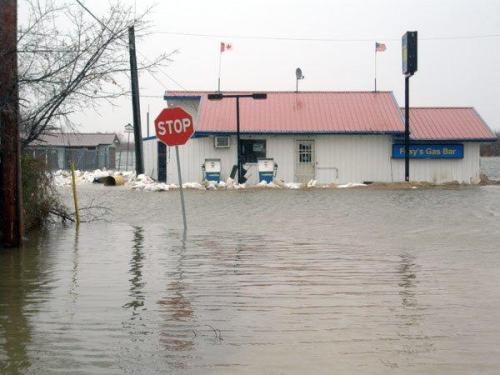
Flooding in Manitoba October 27, 2010 photo by Talia Rostecki

Hydro started regulating the level of the lake in 1976. Since I began working on the Lake Winnipeg Watershed Initiative 2 years ago, I’ve heard a number of people question the impact of the Hydro regulation on both water quality and water quantity. The growing erosion problems are worrisome and the deteriorating water quality has given the lake the dubious distinction of being the “sickest” large lake in the world.
However, its not at all clear to me what the impacts of the Hydro regulation have had. There has been much greater rainfall to the south of us resulting in many more years of flooding in the spring; the number of humans and livestock whose waste ends up in Lake Winnipeg has more than tripled; huge tracts of wetlands have been drained; and industrial developments have occurred. It’s a complex issue with many factors contributing.
One thing that is clear though, is that we should have a much greater understanding of the impacts of lake level regulation so that we can take that information into account in future decisions about hydro development. Every alteration we make to the “natural” landscape has impacts.
Next year Manitoba Hydro will need to renew its license and there will be public consultations during this process. I hope we can count on getting a much better understanding of the impacts on Lake Winnipeg and other river systems so that wise decisions can be made.

image of water covering docks in harbour

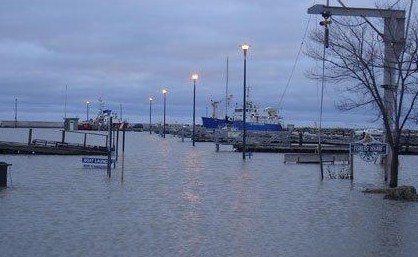
Gimli harbour flooded, Namao Research ship in background

I’ve never heard the term weather “bomb” used before but it certainly conjures up a very threatening image. Our weather forecasters were using that term in Manitoba a couple of days ago to denote a hurricane force winds and heavy rains. In Saskatchewan the weather “bomb” dumped huge amounts of snow and hurricane force winds shut down the Trans-Canada Highway in some parts.
The results of this “bomb” were states of emergency being declared in several areas of Manitoba due to overland flooding and massive waves wreaking havoc along the shores of Lake Winnipeg . The RM of Mossey River,  Winnipegosis, Gimli and St. Clement have all declared states of emergency.  Sagkeeng  First Nation saw 10 homes being evacuated due to rising waters from the Winnipeg River and some of these same residents had to evacuate due to flooding as recently as last spring.
Several people living in these areas have made the comment that they’ve never seen anything like this while our Minister of Water Stewardship, Christine Melnick, is saying this is the new normal. Once again we’re seeing the effects of climate change in this intense and dramatically unseasonable storm.

I wonder how many people make the connection between this extreme weather event and what scientists are predicting will be more common with changing climate patterns? I hope that connection starts to infiltrate our consciousness to a much greater extent and ultimately motivates us to take the actions we can to decrease our greenhouse gas emissions. 
.

I was excited to see a news release a few days ago announcing that the Canadian Council on Ministers of the Environment at their recent meeting in Saint Johns, Newfoundland had adopted a three year national strategy on water. Considering that the very essence of our lives is dependent on clean safe water, it makes sense that our elected leaders are deciding that we should have a consistent policy for water all across our country.
Groups like the Council of Canadians, FLOW – Forum for Leadership on Water, The Gordon Water Group, and the Sierra Club of Canada to name a few, have been calling for a national water strategy for several years. Today there is an excellent article in my local paper, The Winnipeg Free Press, that spells out very clearly why we need a national water strategy. If this is a new idea for you, take a minute to read this article.

image of a drop of water

Water - the essence of life

However, I’m having some difficulty finding out any details about what is contained in the three year strategy our provincial and federal ministers have signed on to. I hope there is some substance to this announcement and I’ll let you know if I can find out what that substance is!

Community Foundations of Canada  in conjunction with Environics Research Group have just released the results of a national survey that points out a disturbing disconnect between the way Canadians view their own local environment and the concern they have for global environmental issues. Most of those surveyed felt content with their own local environment at the same time as expressing that environmental concerns are the number one problem facing the world.

image of 3 children splashing into the water at a lake

Children Splashing in the Lake

In some ways, this is understandable since we still tend to think of Canada as a country of wide open unlimited spaces with lots of wilderness and clean water. The reality, however , is that there are very significant issues in Canada that we all can be part of turning around. Some of those issues are:
• Greenhouse gas emissions from personal vehicles, which have risen by almost one-third in Canada since the early 1990s
• The Alberta Tar Sands, called the fastest growing source of global warming pollution in Canada, will affect all Canadians no matter where they live because of its sheer scale.
• Record algae blooms in the Lake Winnipeg watershed – and across North America –  this summer, causing illness in people and pets
• The more than 213 billion litres of water wasted by Canadians every year (roughly equivalent to the City of Toronto’s annual water use) due to low efficiency toilets
• And the most personal example of all: the toxins that can now be found in our bodies, such as bisphenol A, which a recent survey found in 91 per cent of Canadians aged six to 79

Check out the full story on this survey and its implications on the Vital Signs website. I think its an important red flag for those of us working on environmental issues. We need to really be thinking about how to bring that concern for the global environment into everyone’s back yard. Each one of us has the potential to contribute to a healthier environment through so many everyday actions. How do we take this message “mainstream”?

« Newer Posts - Older Posts »

Categories